


Council of Higher Education Launches Major Human Resources Initiative in Critical Technologies
- Major human resources initiative in critical technologies launched by the Council of Higher Education: Applications open for 550 young researchers
- Procedures and principles established for the Türkiye Strategic Technology Human Resources Program; 550 researchers to be trained in the first year and 3,000 over five years
- Young people pursuing PhDs in four strategic fields, from AI to cybersecurity, will also work as research assistants
- Applications will be accepted from September 8 to 22, with the centralized written examination to be administered by ÖSYM on November 28
- CoHE President Özvar: “We will strengthen Türkiye’s capabilities in strategic fields through highly qualified human resources”
“We will begin training today the scientists who will develop the technologies of the next two decades”
August 29, 2026
The application and selection process for the Türkiye Strategic Technology Human Resources Program, launched to train the highly qualified human resources Türkiye needs in critical fields such as artificial intelligence, cybersecurity, information technologies, and advanced computer systems, has been finalized.
Under the procedures and principles established by the Council of Higher Education, 550 PhD graduates will be trained in the program’s first year in the fields of “Information Technologies,” “Hardware and Computer Systems,” “Cybersecurity,” and “Artificial Intelligence and Intelligent Systems.” By the end of the five-year program, around 3,000 young researchers are expected to be brought into Türkiye’s science and technology ecosystem.
Strengthening Türkiye’s science and technology ecosystem and training highly qualified human resources for strategic development goals
Under the new model, which aims to strengthen Türkiye’s science and technology ecosystem and train highly qualified human resources for its strategic development goals, 550 PhD students will be selected through a centralized examination. Young researchers who will receive training at Türkiye’s leading research universities will also be employed as research assistants. In this way, knowledge production and the development of academic human resources will be supported simultaneously.
Selected through a centralized system, young researchers will continue their PhD studies while also working as research assistants. Thus, PhD education, scientific research, and academic employment will be brought together within a single model.
The program aims to strengthen Türkiye’s long-term researcher human resources in critical technologies, more closely align the scientific capacity of research universities with the country’s strategic priorities, and accelerate the transformation of knowledge produced at universities into technology, products, patents, and economic value.
CoHE President Erol Özvar said that they had taken a new step to support Türkiye’s ambitions in science and technology with a strong and highly qualified human resources base. “Through the Türkiye Strategic Technology Human Resources Program, we will place our young people at the center of scientific production in the critical technologies of the future and more closely align the capacity of our research universities with our country’s strategic goals,” he said.
Emphasizing that simply possessing technology is no longer sufficient in global competition and that the decisive factor is a highly qualified workforce capable of designing, developing, and advancing that technology, Özvar said, “We will strengthen Türkiye’s capabilities in strategic fields through the highly qualified human resources we will train in these areas.”
“We are taking the transformation of the defense industry into critical technologies”
Drawing attention to the fact that one of the most important factors behind Türkiye’s success in the defense industry in recent years has been its skilled workforce, Özvar continued:
“Having placed our trust in our own engineers, scientists, and the capabilities of our young people, we have achieved a major transformation in the defense industry. We are now extending this transformation to AI, cybersecurity, chip technologies, and other critical fields of the future. Our goal is not merely to meet today’s needs, but to begin training today the scientists who will develop the technologies of the next two decades.”
Özvar said they did not want knowledge produced at universities to remain confined to laboratories or academic publications, adding, “We want knowledge to be transformed into technology, products, patents, and economic value. The fundamental prerequisite for this is a strong and highly qualified human resources base. Through this program, we will guide our young people toward strategic fields while also expanding our country’s research and innovation capacity.”
Candidates can make five choices from two fields
Candidates will submit their applications electronically between September 8 and 22, 2026, through the Application System for PhD Programs in Priority Fields established by the Council of Higher Education. During the application process, candidates will be allowed to make a total of five choices from no more than two different fields among the announced programs. Candidates will be evaluated only for the programs they have selected.
Those who hold undergraduate degrees in the fields specified in the application system, as well as those who hold undergraduate degrees in the specified fields and are pursuing a thesis-based master’s degree in one of the relevant fields, will be eligible to apply for the quotas.
The eligible fields of study cover a broad range of disciplines. In addition to numerous engineering fields such as computer engineering, software engineering, electrical and electronics engineering, artificial intelligence, mechatronics, mechanical engineering, industrial engineering, materials engineering, energy engineering, and aerospace engineering, graduates of programs such as computer science, mathematics, statistics and computer science, and information systems and technologies will also be eligible to apply for the relevant quotas. The designated fields of study also include disciplines such as medicine, dentistry, pharmacy, law, and architecture, which admit students based on achievement rankings.
In this way, the program aims to channel talent from different scientific and engineering disciplines toward Türkiye’s priority technology fields.
The Procedures and Principles for the Selection of Students for PhD Programs in Priority Fields and the Appointment of These Students to Research Assistant Positions and Other Matters are available on the CoHE’s official website.
- There will be no oral examinations
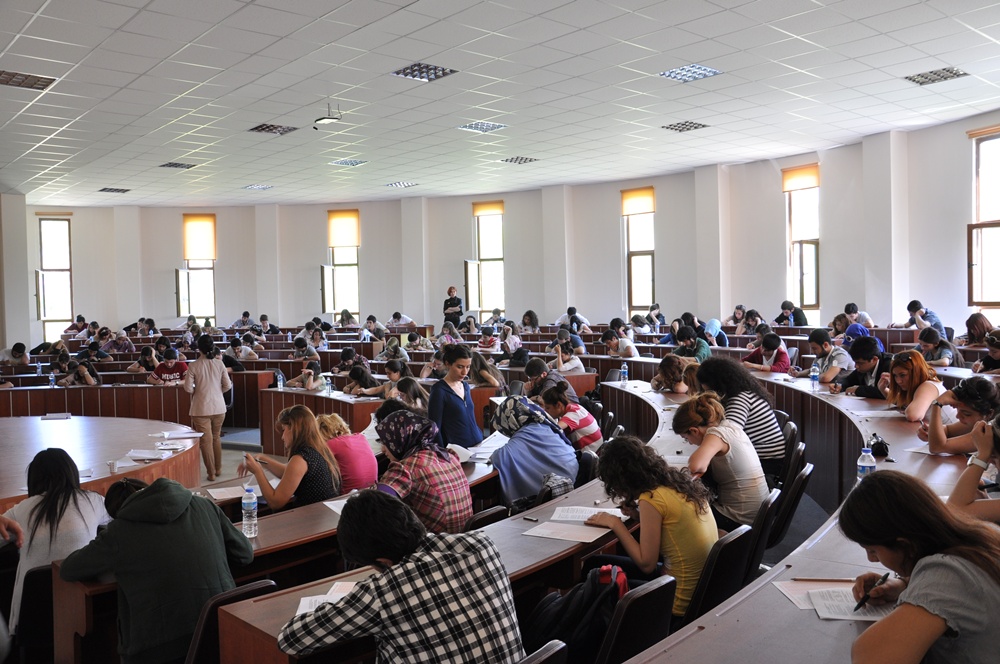
The centralized written examination will be administered by ÖSYM on behalf of the Council of Higher Education on November 28, 2026.
Candidates will be eligible to take the examination only for the program they selected in the application system and for which they qualified to sit the examination. Candidates who score below 70 on the centralized written examination will be considered unsuccessful. Fifty percent of the examination will consist of a common core module for all candidates, while the remaining 50 percent will consist of a field-specific module.
The examination topics will include machine learning, artificial neural networks, large language models, Transformer architecture, and trustworthy and explainable artificial intelligence in the field of artificial intelligence; cryptography, authentication, threat modeling, network security, and software security in cybersecurity; programming, databases, cloud computing, and the software life cycle in information technologies; and computer architecture, microprocessors, high-performance computing, and embedded and real-time systems in hardware and computer systems.
Following the centralized examination, candidates’ final scores will be calculated based on four different criteria. Thirty percent of the centralized written examination score, 25 percent of the undergraduate graduation grade, 25 percent of the ALES score, and 20 percent of the foreign language examination score will contribute to the final score.
Young people who are entitled to enroll in the program will take their first steps into academic life as research assistants while continuing their PhD studies in the programs to which they have been admitted. Appointments to research assistant positions will be made by the relevant universities in accordance with the legislation in force. Candidates may be required to complete scientific preparation courses depending on their educational background. Integrated PhD programs will be provided for undergraduate degree holders.
Images

Images