



Second Term of Data Analysis School Begins
February 2, 2026
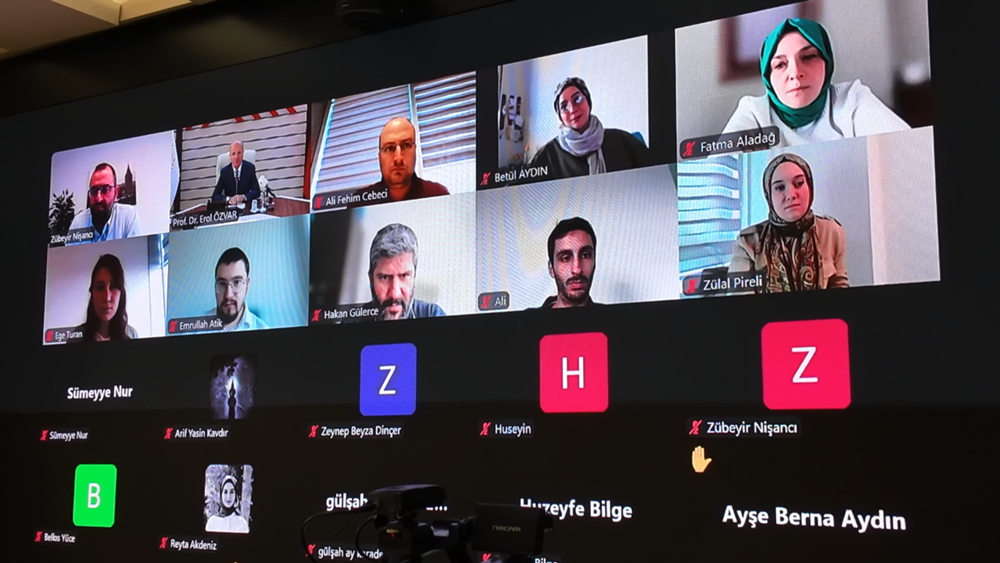
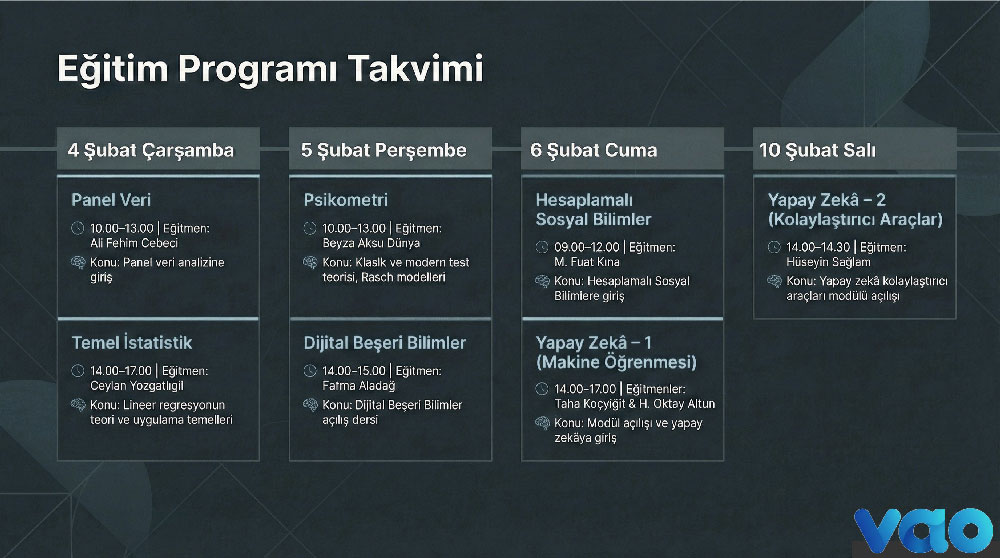
The second term of the “Data Analysis School,” which was launched under the auspices of the Council of Higher Education through the collaboration of four of Türkiye’s long-established universities and attracted record interest, will begin on February 4.
Conducted under the auspices of the Council of Higher Education through the joint efforts of Marmara University, Middle East Technical University, Istanbul Technical University, and Boğaziçi University, the second term of the Data Analysis School will start with courses on panel data and basic statistics.
In the second-term program, the aim is to deepen the fundamental knowledge and skills acquired in the first term through specialization-oriented modular courses. Second-term classes will continue until May 15, 2026.
Throughout the fall term, participants had the opportunity to acquire the basic concepts and methods of data analysis and statistics through both theoretical and practical studies. More than 20 class sessions were held, providing approximately 60 hours of instruction. During the training, participants gained core competencies related to cleaning, organizing, analyzing, and interpreting data. Nearly 30,000 people actively participated in the first-term courses.
As part of the second term, seven modules will be offered by approximately 30 experts in their respective fields: “Basic Statistics,” “Panel Data,” “Computational Social Sciences,” “Digital Humanities,” “Psychometrics,” “Artificial Intelligence: Machine Learning,” and “Artificial Intelligence: Facilitative Tools.” The modules will focus on developing skills in working with different types of data, selecting appropriate methods, evaluating analytical outputs, and applying them in interdisciplinary contexts.
– Participants from Different Educational Levels and Professional Fields
Data Analysis School Coordinator Assoc. Prof. Zübeyir Nişancı stated that the strong interest shown in the program points to a multifaceted and broad societal need in the field of data analysis.
Emphasizing that participants coming from different social groups, educational levels, and professional fields clearly demonstrate the widespread nature of this need, Nişancı noted that the demand to learn data analysis is not limited solely to education and academic research; rather, there is strong demand directly connected to many areas ranging from the business world to social life.
Stating that, thanks to the distance education model, high-quality education can be delivered to very large audiences in a low-cost, flexible, and rapid manner, Nişancı said that in this respect, the Data Analysis School offers an accessible and inclusive model in higher education.
Images



Images