


CoHE President Özvar Announces Strategic Quota Transformation
February 17, 2026
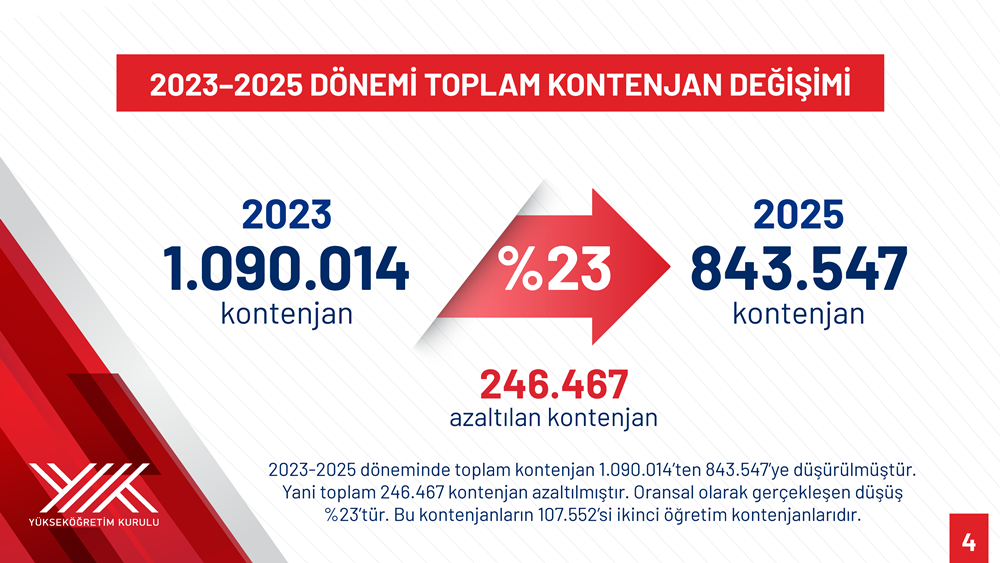
President of the Council of Higher Education (CoHE), Erol Özvar, announced that the total higher education quota was reduced from 1,090,014 to 843,547 during the 2023-2025 period, representing a 23 percent decrease. “We will continue reducing quotas in certain programs at varying rates in 2026 as well,” he said.
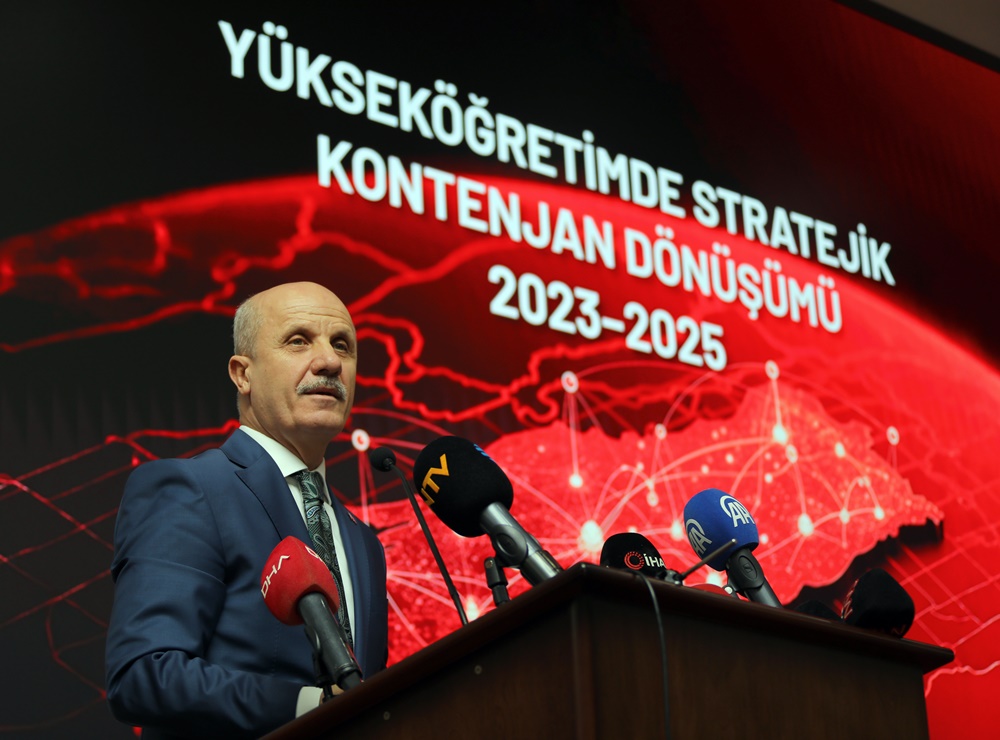
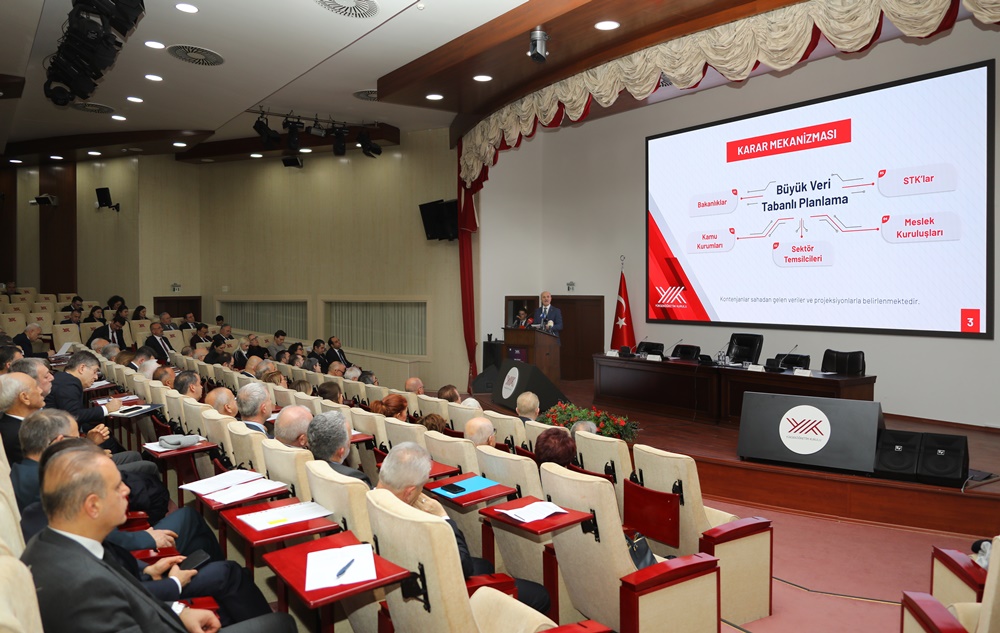
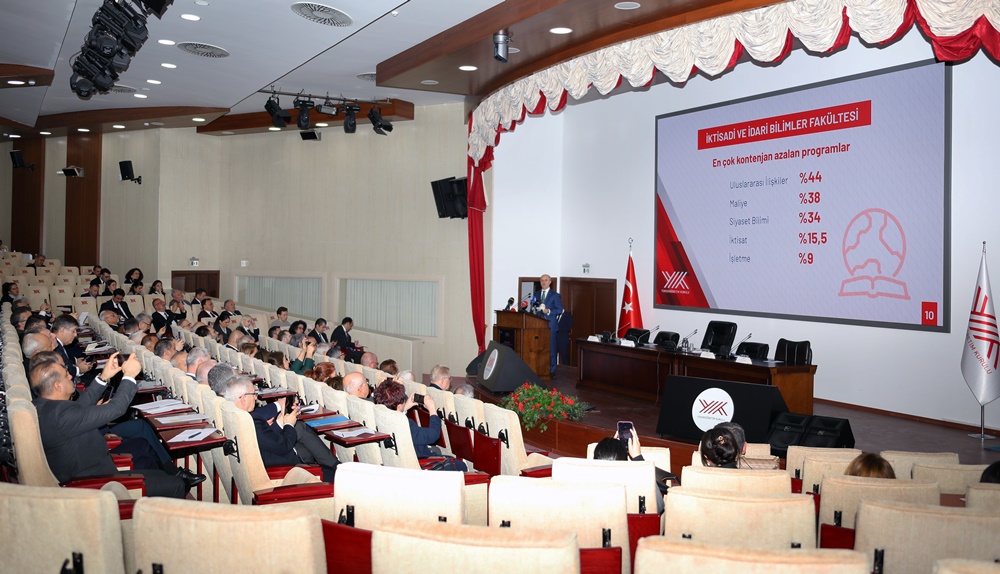
The “Union of Chambers and Commodity Exchanges of Türkiye Higher Education Council Consultation Meeting” was held in the Conference Hall at the Council of Higher Education.
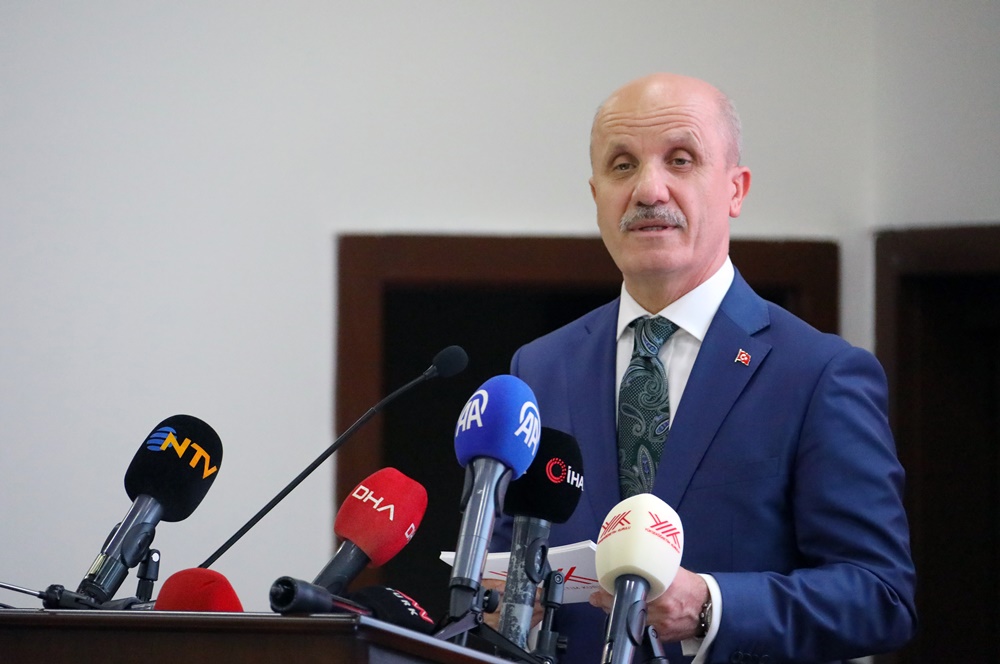
In his speech, Özvar provided information on quota changes implemented between 2023 and 2025.
Stating that significant structural decisions had been taken in both public and foundation universities in recent years, Özvar noted that the first of these decisions was the complete closure of evening education programs.
He added that quotas in some programs with increasingly limited employment opportunities for graduates had also been gradually reduced, saying:
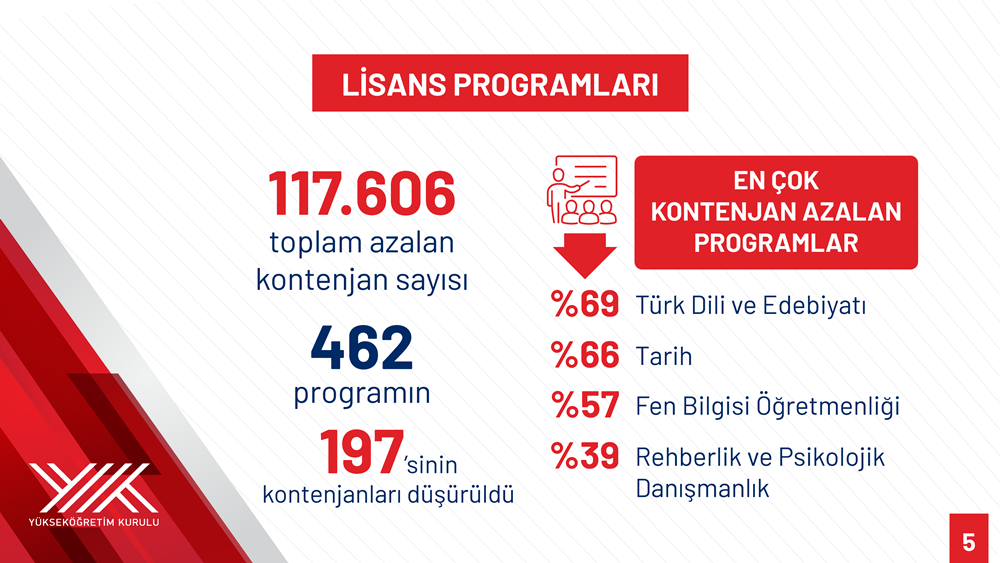
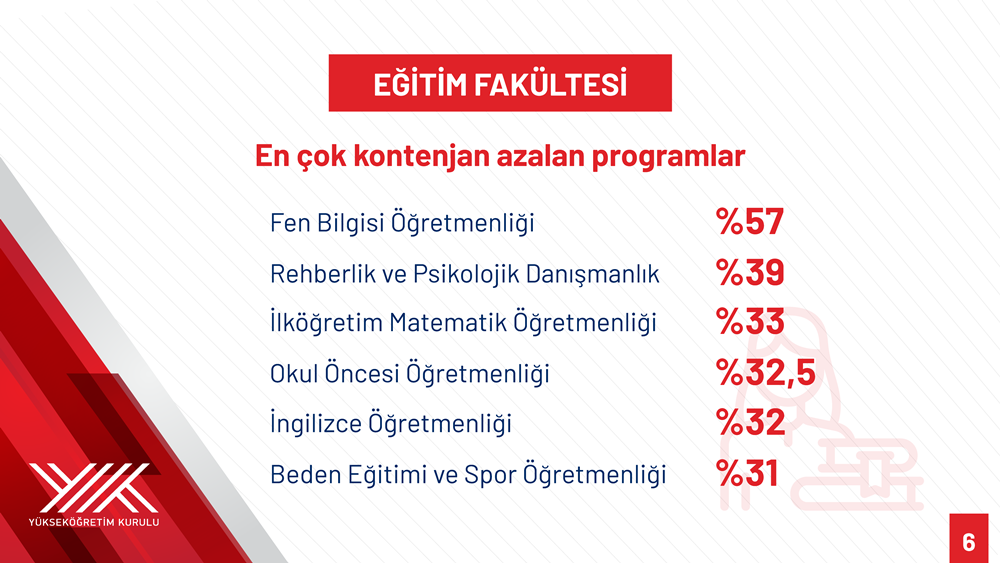
“Between 2023 and 2025, the total quota was reduced from 1,090,014 to 843,547. A total of 246,467 quotas were eliminated, corresponding to a 23 percent decrease. Of these, 107,552 were evening education quotas. During this period, quotas were reduced in 197 out of 462 undergraduate programs, resulting in a total decrease of 117,606 places. The largest reductions occurred in programs that serve as pathways to teaching professions. Turkish Language and Literature quotas fell from 12,015 to 3,680, a 69 percent decrease, while history quotas declined from 10,658 to 3,646, a 66 percent reduction. Science Teaching quotas dropped from 2,864 to 1,219, representing a 57 percent decrease and making it the program with the largest reduction.”
- “Teacher workforce planning by the Ministry of National Education was taken into account”
Özvar stated that during the same period quotas were reduced by 33 percent in Elementary Mathematics Teaching (from 4,018 to 2,698), 32 percent in English Teaching (from 5,060 to 3,437), 31 percent in Physical Education and Sports Teaching (from 3,697 to 2,560), 32.5 percent in Preschool Teaching (from 5,152 to 3,476), and 39 percent in Guidance and Psychological Counseling (from 5,741 to 3,498). He added that a minimum age requirement of 35 was introduced for enrollment as a “second university” in open education undergraduate programs such as Child Development, Philosophy, Sociology, History, and Turkish Language and Literature, which also serve as pathways to teaching. “In determining quotas both for education faculty programs and other programs feeding into the teaching profession, teacher workforce planning by the Ministry of National Education in both the public and private sectors was taken into consideration,” he said.
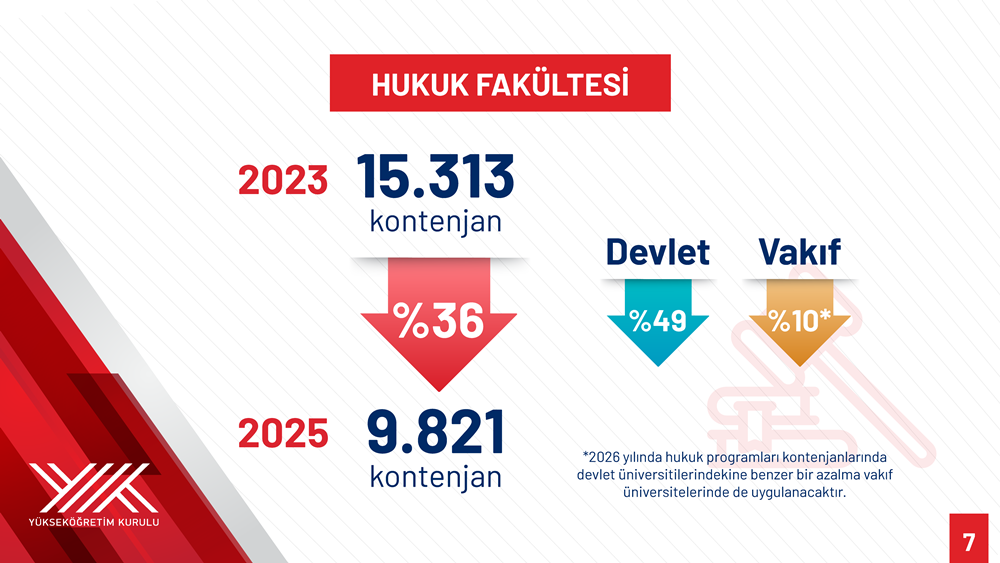
Özvar also noted significant adjustments in law faculty quotas, stating that between 2023 and 2025 quotas at public and foundation universities decreased from 15,313 to 9,821—a 36 percent reduction. He explained that the decrease amounted to 49 percent in public universities (4,955 places) and 10 percent in foundation universities (537 places), adding that similar reductions would be implemented in foundation universities’ law programs in 2026.
- “Quota reductions will also be introduced at foundation universities in 2026”
Providing data on health-related programs, Özvar continued:
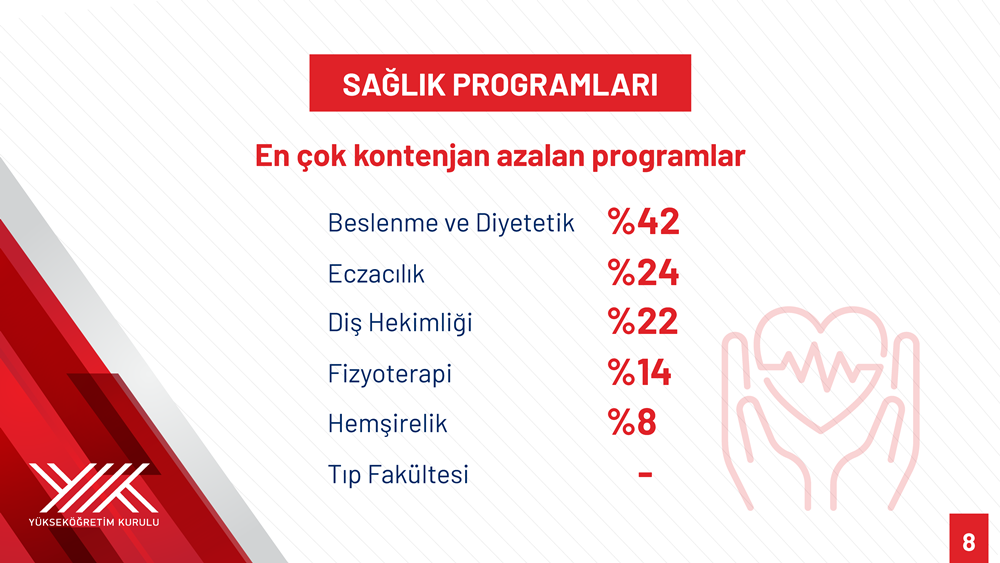
“The Nutrition and Dietetics program experienced the largest reduction, with quotas decreasing from 6,922 to 4,024—a 42 percent decline. Pharmacy quotas fell from 4,512 to 3,416, representing a 24 percent decrease. Dentistry quotas dropped from 9,127 to 7,081, a 22 percent reduction. Physiotherapy and Rehabilitation quotas decreased from 6,761 to 5,826 (about 14 percent), while Nursing quotas declined from 18,465 to 17,036 (approximately 8 percent). Medical Faculty quotas, however, were maintained during this period. Most quota reductions in health programs have taken place in public universities. In 2026, quotas in these programs at foundation universities will also be reassessed and reduced.”
– “Quotas have been reduced in many engineering programs”
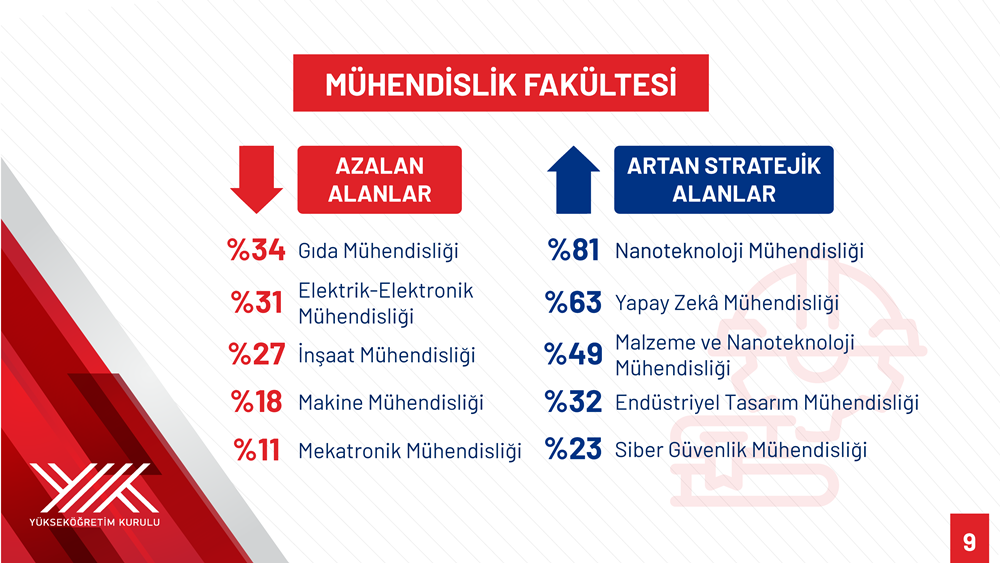
Özvar emphasized that significant reductions were also made in engineering faculties. Food Engineering quotas decreased by 34 percent (from 1,758 to 1,156); Electrical and Electronics Engineering by 31 percent (from 11,757 to 8,063); Civil Engineering by 27 percent (from 5,668 to 4,115); Environmental Engineering by 26 percent (from 1,152 to 850); Mechanical Engineering by 18 percent (from 8,427 to 6,919); Mechatronics Engineering by 11 percent (from 2,096 to 1,869); Chemical Engineering by 7 percent (from 1,969 to 1,867); Industrial Engineering by 5 percent (from 7,679 to 7,262); and Computer Engineering by 3 percent (from 14,674 to 14,168).
He added that quotas were also reduced at varying rates in several smaller programs, including Biomedical Engineering (24 percent), Bioengineering (20 percent), Materials Engineering (3 percent), Electrical Engineering (28 percent), Electronics and Communication Engineering (18 percent), Railway Systems Engineering (74 percent), Forensic Informatics Engineering (37 percent), and Agricultural Machinery and Technologies Engineering (21 percent).
– Programs established or gaining momentum in the past two years
According to Özvar, programs with increased quotas include: Artificial Intelligence Engineering (63 percent); engineering programs such as Cybersecurity Engineering and Geomatics Engineering (23 percent); Ship and Marine Technologies Engineering (19 percent); Geological Engineering (8 percent); Nanotechnology Engineering (81 percent); Marine Engineering Operations (4 percent); Automotive Engineering (4 percent); Aeronautical Engineering (3 percent); Maritime Transportation Management Engineering (9 percent); Industrial Design Engineering (32 percent); Materials and Nanotechnology Engineering (49 percent); Forest Industry Engineering (16 percent); Naval Architecture and Marine Engineering (8 percent); Metallurgical and Materials Engineering (3 percent); and Fisheries Engineering (7 percent).
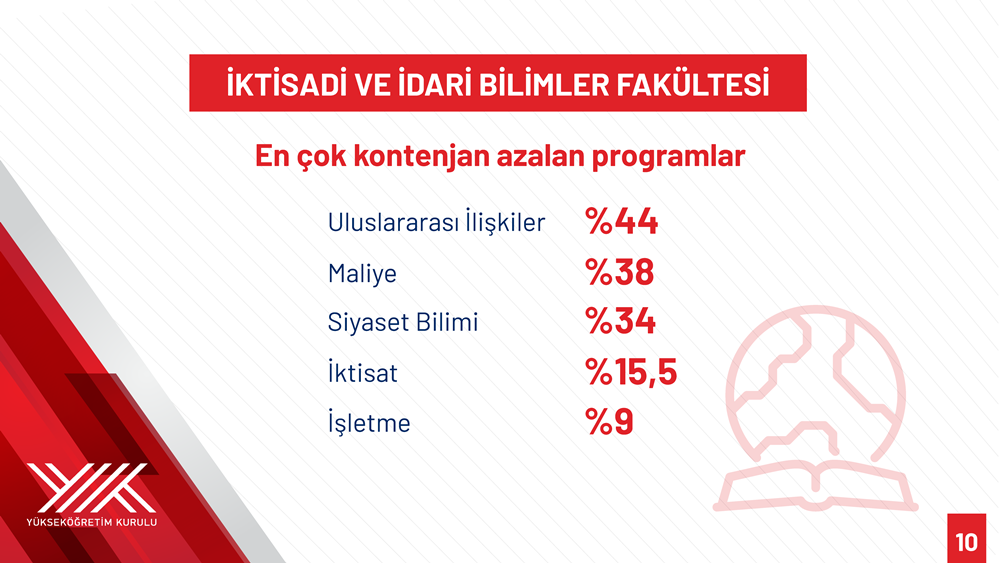
Özvar stated that programs within Faculties of Economics and Administrative Sciences were also significantly affected by quota regulations: International Relations quotas fell by 44 percent (from 7,110 to 3,994); Political Science and Public Administration by 34 percent (from 8,000 to 5,285); Economics by 15.5 percent (from 9,437 to 7,972); Business Administration by 9 percent (from 13,358 to 12,158); and Public Finance by 38 percent (from 5,813 to 3,590).
He also noted that Theology Faculty quotas were reduced from 15,795 to 10,859 between 2023 and 2025, corresponding to a 32 percent decrease.
– Other undergraduate programs with significant reductions
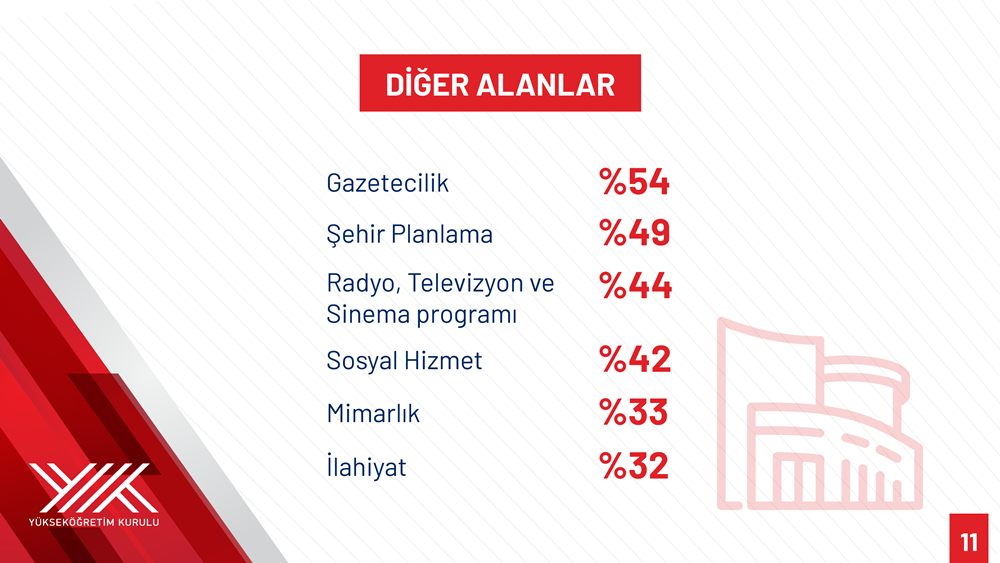
Özvar listed additional programs with major quota decreases: Journalism fell by 54 percent (from 4,677 to 1,866); Urban and Regional Planning by 49 percent (from 2,448 to 1,240); Radio, Television and Cinema by 44 percent (from 5,180 to 2,870); Social Work by 42 percent (from 4,677 to 2,691); Architecture by 33 percent (from 6,365 to 4,264); Interior Architecture by 33 percent (from 2,386 to 1,594); and Psychology by 13 percent (from 11,966 to 10,428).
– “Quotas will continue to be allocated to programs aligned with new professions”
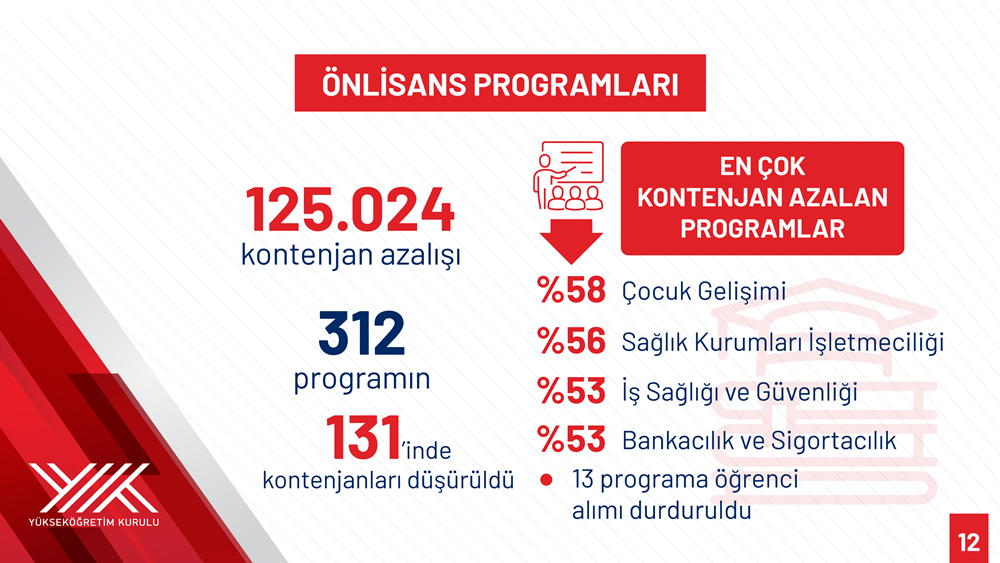
Özvar stated that quotas were reduced in 131 out of 312 associate degree programs during 2023-2025, resulting in a total reduction of 125,024 places. Programs with the largest decreases included Child Development (58 percent), Health Institutions Management (56 percent), Occupational Health and Safety (53 percent), Banking and Insurance (53 percent), and Medical Documentation and Secretariat (51 percent).
He also announced that student admissions were suspended in 13 associate degree programs—including Justice, Applied Translation, Sports Management, and Radio and Television Programming—and added that future quota allocations would increasingly prioritize practice-oriented programs aligned with emerging professions.
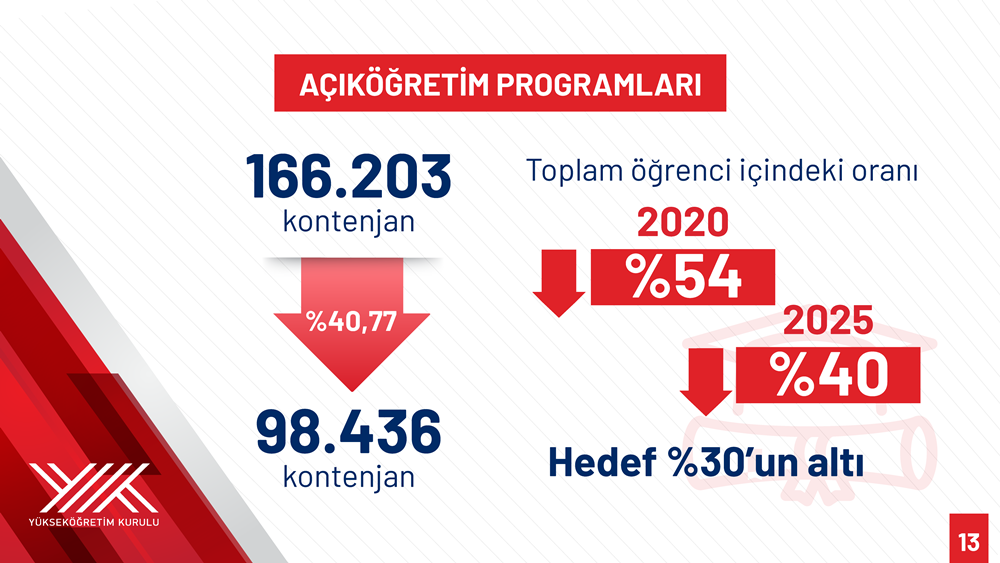
Özvar further noted that open education quotas had been reduced from 166,203 to 98,436—a 40.77 percent decrease. While open education students accounted for 54 percent of all higher education students in 2020, this ratio declined to 40 percent by 2025, with a target of reducing it below 30 percent within five years. He emphasized that open education is being restructured to serve adult education and lifelong learning rather than primarily traditional university-age students.
– “Quota reductions will also apply to foundation universities”
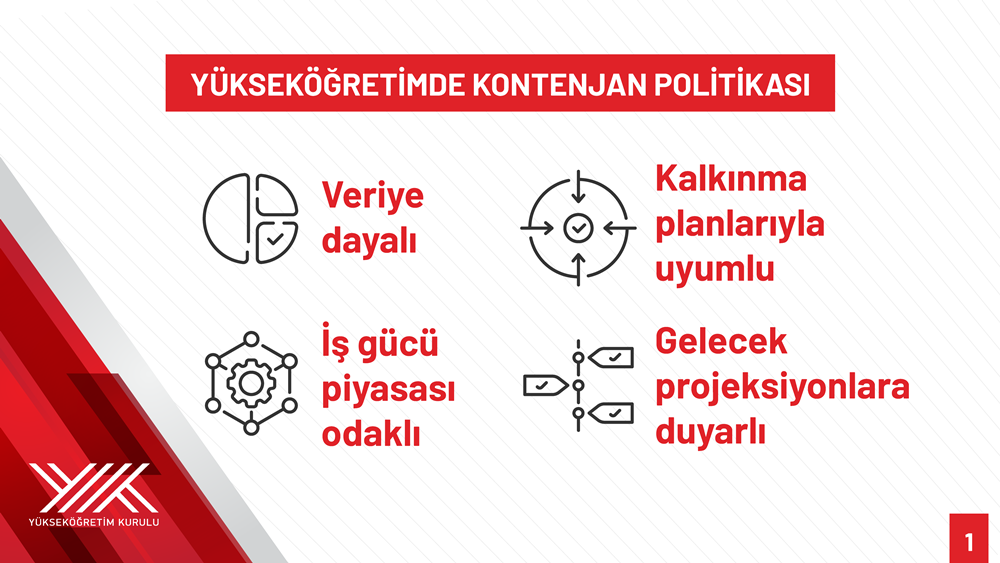
Özvar stated, “We will continue reducing quotas in certain programs at varying rates in 2026,” adding that quota reduction policies applied in public universities will also extend to foundation universities starting in 2026. Programs such as law, psychology, pharmacy, dentistry, and architecture will see quota reductions at foundation universities as well. “Our main objective is to establish a balanced, sustainable, and quality-oriented structure across the entire higher education system,” he said.
– “We cannot turn a blind eye to this”
Emphasizing that programs ignoring students’ preferences and expectations cannot succeed, Özvar continued:
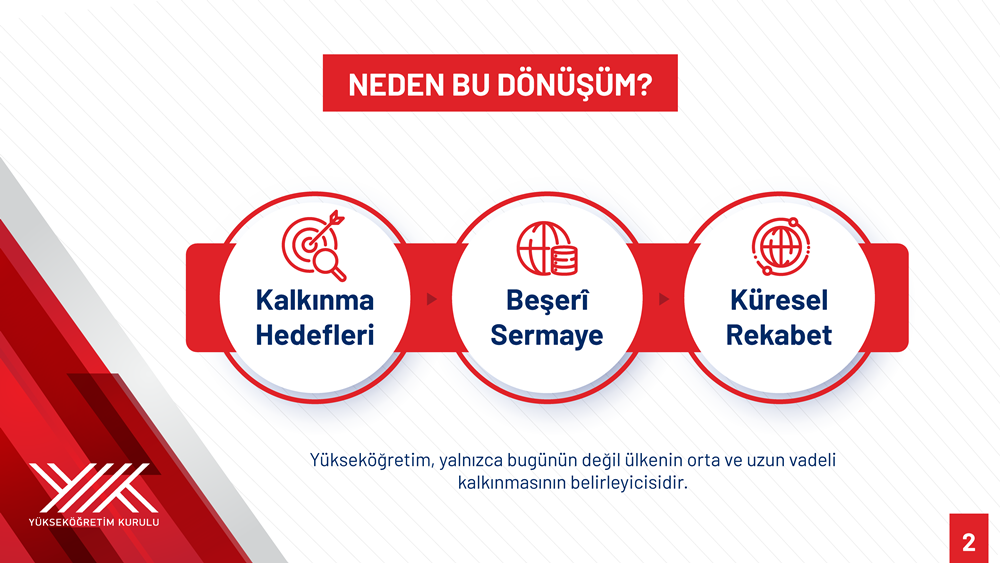
“We must evaluate the demands extremely carefully. Insisting on programs that no longer correspond to employment needs is a waste of resources—not only financial resources but also human capital. As the Council of Higher Education, we cannot allow this. Raising quality standards in education, preventing excessive student numbers, and managing academic human resources more effectively are at the core of our quota policies. Overcrowded classrooms, limited practical training opportunities, and increasing student-to-faculty ratios clearly undermine quality. We do not ignore these problems; instead, we pursue structural solutions.”
– “Vocational schools have once again become centers of attraction through strong projects”
Özvar stressed that despite quota reductions, the Council of Higher Education remains committed to access to higher education, noting that quota reductions are “not a policy restricting access but an approach aimed at improving the quality of education accessed.”
Stating that these two goals are not alternatives but complementary to one another, Özvar concluded his remarks as follows:
“In place of programs that were closed or reduced, we have taken major steps over the past two years in artificial intelligence and digitally based fields. Today, more than 100 universities have launched numerous new programs in areas such as artificial intelligence, big data, cybersecurity, and digital technologies. These programs attract strong student interest and achieve high occupancy rates, clearly demonstrating that young people are consciously turning toward the professions of the future. Likewise, our vocational schools have undergone a significant transformation in recent years. Especially through organized industrial zone vocational schools and strong practice-oriented projects integrated with industry, our vocational schools have once again become centers of attraction.”
Images

Images