


“Disaster of the Century” Could not Stop Scientific Productivity
February 6, 2025
The universities affected by the Kahramanmaraş-centered earthquakes that occurred on February 6, 2023, continue to set an example for the whole country with their studies. After the earthquakes, which are described as the “Disaster of the Century”, universities that continued education draw attention with their scientific productivity and social responsibility projects.
In 2024, 18 state and foundation universities in 11 provinces in the earthquake zone published 11,734 national and international publications. While the average number of publications of 208 Turkish universities was 566 in 2024, the number of publications of universities in the earthquake zone was above the average of Türkiye. The average number of publications of 18 universities in the region was 651.
There are 402,121 students and 16,200 academic staff at the universities located in the earthquake zone. 18,263 international students are studying at these universities. 7,129 students are pursuing doctoral studies.
They attract attention with their important projects in various fields
Universities in the earthquake zone draw attention with their projects, utility models or patents in many fields such as science, technology, health and AI.
In 2024, İnönü University, which has 746 national and international publications, patented the invention of “Robot-Assisted Frameless Stereotactic Brain Biopsy System”. In this system, developed in collaboration with Fırat University, Magnetic Resonance Imaging (MRI) and Magnetic Resonance Angiography (MRA) shots are taken sequentially from the patient who is fixed on the operating table with a head stabilizer, and the patient can be transferred directly to the operating room and robotic biopsy can be performed.
At İnönü University, in addition to the study “Flood and landslide analysis of Malatya drinking water source after the February 6 earthquake”, the project “Investigation of Asbestos and Dust Concentration in Breathable Air in Malatya Province after the Earthquake” set an example as concrete outputs for the benefit of society.
Çukurova University published 1,047 publications in 2024. Its AI project “The Use of Diffusion Probabilistic Models in Image Enhancement and Restoration of Serially Captured Images”, which was developed to solve problems such as image enhancement, blur, low light and noise, and which is important in many areas from autonomous vehicles to object detection, will perform processes such as motion blur removal and noise reduction more successfully and achieve superior results compared to existing methods.
At the same time, in the “Children's Kindness Center” established at Çukurova University after the February 6 earthquake, psychological support and treatment activities are carried out for earthquake survivor children from all over Türkiye, mainly on trauma, grief and loss of limbs. The center provides psychological and physical treatment free of charge and scholarships to support children's education.
With 1,342 published articles in 2024, Dicle University has a patent for the study “Fast and Easy Diagnosis of Tuberculosis with Agents Attached to Magnetic Nanoparticles”, which is an invention in the field of health, especially for medical diagnosis and treatment processes.
The number of articles published at Fırat University is 1,075. The university draws attention with its study “AI-Based Irregularly Distributed Contamination Detection System Considering Wind Effect in High Voltage Insulators”, which is related to the contamination detection system that identifies insulator surface contamination for high voltage insulators, undertaking the tasks of providing isolation between the energized line and the ground and carrying the mechanical loads of the line. The university also stands out with its project “AI Supported New Approach for Post-Disaster Situation Assessment and Reporting from Images Taken by UAV” developed for damage assessment after natural disasters. The project aims to monitor the post-disaster zone from the air with autonomous UAVs, analyze the collected images with deep learning techniques and generate real-time damage assessment reports.
In 2024, 514 national and international publications were published at Adıyaman University, 470 at Adana Alparslan Türkeş Science and Technology University , 309 at Gaziantep Islamic Science and Technology University , and 35 at Sanko University.
Gaziantep University, which has 813 publications in indexed journals and books in the last year, is the 10th university with the highest number of patents with 24 positively finalized patents. The academics of the university developed “Super Tarhana” by increasing the functionality and durability of tarhana, which has high nutritional properties, and making it suitable for earthquake bags.
Harran University has 1,050 national and international publications. At the same time, the “High Performance Computing Center” at the university was reopened and continues to provide the necessary infrastructure for universities and the private sector to make advanced calculations in their scientific research and R&D activities.
Within the scope of the “Special Call for Universities in the Earthquake Zone - BİNBİRÇABA” project, the study on “Determination of the Chemical Composition and Health Effects of Respirable Particulate Matter from Building Demolition and Debris Removal in the Earthquake Zone” is being carried out in partnership with other universities.
Hasan Kalyoncu University, on the other hand, published 335 publications in 2024. The university also received an international patent with the study “System and Usage Method for Measuring the Resistance of the Grounding System Using Capacitive Probes” developed with the support of AI.
The number of publications of Hatay Mustafa Kemal University in the last year was 860. The final product of the study “Device that Prevents the Transmission of Viruses on the Face through Contact” gives the user an audible warning when hands or other objects approach the face, preventing the transmission of viruses that adversely affect human health, and enabling the use of the phone with headphones.
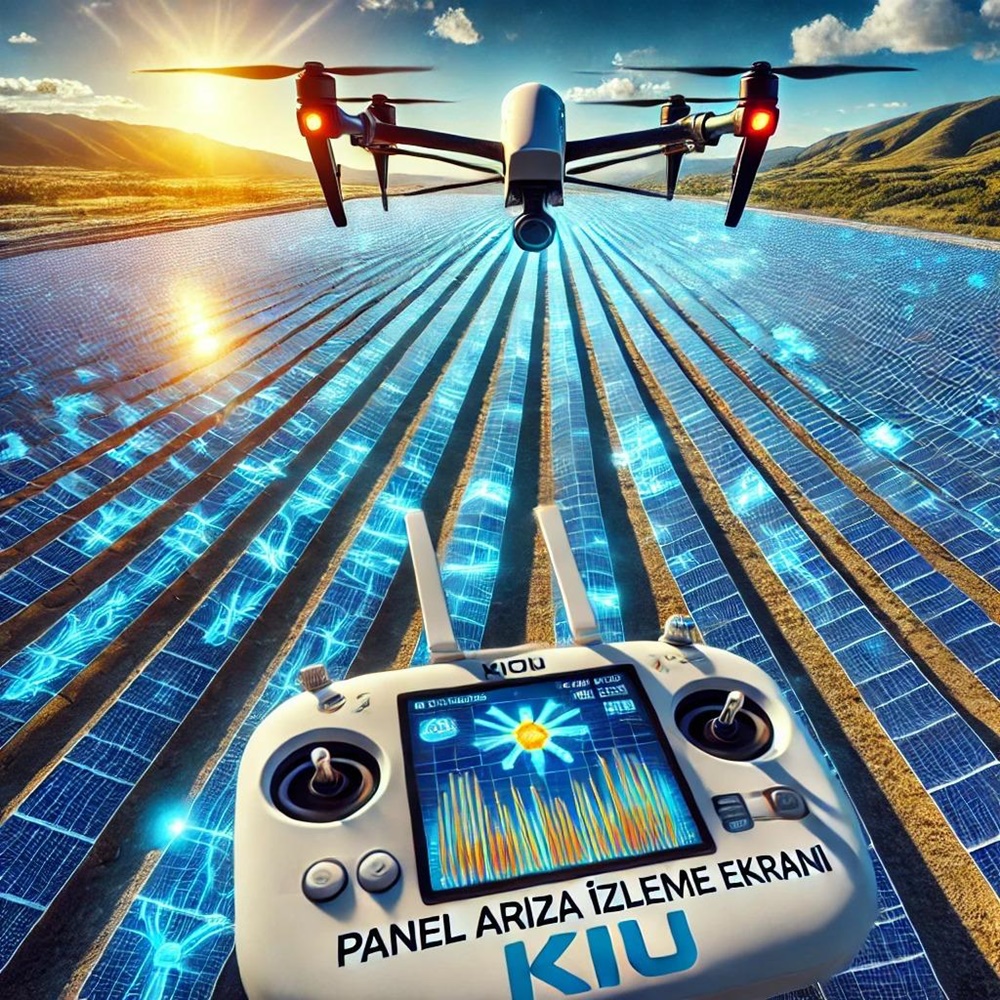
In 2024, 77 articles were published at Kahramanmaraş Istiklal University . The project titled “Automatic Detection of Multi-Class Photovoltaic Panel Failures in Solar Power Plants with Thermographic Imaging and Artificial Intelligence” aims to quickly detect the failures of panels in solar power plants with AI-based priority area and real-time image processing techniques.
Kahramanmaraş Sütçü İmam University, which published 1,481 articles, has a patent for the project “Waste Fiber Reinforced Multifunctional Sandwich Composites Production Method”.
Osmaniye Korkut Ata University published 630 articles in the last year, while Kilis 7 December University published 254 articles. Kilis 7 December University published the study “Improving Fathers' Involvement After the Earthquake: The Cases of Hatay and Kahramanmaraş” to evaluate the effectiveness of a training module that improves the involvement of earthquake victims' fathers.
273 articles were published at Iskenderun Technical University in 2024. The university stands out with its study “Humanoid Robot Assisted Turkish Dialogue Application for the Education of Children with Down Syndrome”. The university has a publication in an international scientific journal with Q1 index, which includes comprehensive field research on the historical city texture of Antakya after the earthquake and a systematic analysis documenting the structure of an Antakya house with a 3D digital laser scanner. Within the scope of this research, technical evaluations and recommendations are presented for the earthquake-resistant reconstruction of traditional Antakya houses affected by earthquakes.
Malatya Turgut Özal University published 423 national and international articles last year. The university holds a patent with the project “Synthesis of a heterocyclic chalcone for anticancer activities in cancer cell lines”, which provides synthesis for activity against cervical and prostate cancer.
Images
Images