


University Hospitals Strengthen Türkiye’s Healthcare Capacity Through Advanced Medical Care, Transforming Patients’ Lives
- From performing surgery on patients without requiring them to leave their home cities to giving a new lease on life to patients who have waited years for organ transplants, university hospitals are turning academic knowledge and advanced technologies into achievements that directly improve people’s lives
- CoHE President Özvar: “University hospitals combine treatment, research, technology development, and the training of healthcare professionals”
September 18, 2026
University hospitals across Türkiye are expanding highly specialized healthcare services through advanced medical technologies and strong academic teams, directly transforming patients’ lives through complex procedures and treatments.
Providing specialized healthcare services in a wide range of fields—from robotic surgery and organ transplantation to fetal surgery, advanced cancer treatments, AI-assisted imaging, and domestically developed healthcare technologies—university hospitals are among the key pillars of Türkiye’s healthcare capacity, drawing on their academic expertise and technological infrastructure.
- Expertise eliminates geographical barriers
One of the most striking examples of this capacity was a remote surgery performed between Istanbul University Faculty of Medicine and Muş State Hospital.
A patient with kidney stones was treated in Muş without having to travel to Istanbul for surgery. The operation, remotely controlled by a team at Faculty of Medicine of Istanbul University, was performed using 5G infrastructure and a domestically developed surgical robot.
Conducted from a distance of around 1,500 kilometers and lasting about four hours, the procedure went down in history as the world’s first remote surgery for kidney stone treatment using the RIRS method. The procedure was performed without a surgical incision, with the physician in Istanbul and the medical team in Muş working simultaneously.
The achievement also demonstrated that the expertise available at university hospitals is not limited to their own campuses.
- Advanced medicine begins before birth
Advanced surgical procedures at university hospitals sometimes begin before a patient is even born.
At Hacettepe University, a congenital opening in the spinal cord of a 26-week-old fetus was repaired in the womb using fetoscopic, or minimally invasive, surgery. The procedure, carried out by a multidisciplinary team of around 30 people, was Türkiye’s first fetal surgery case performed using a minimally invasive approach.
Hacettepe University also uses robotic surgery in urology, otorhinolaryngology, obstetrics and gynecology, general surgery, thoracic surgery, and cardiovascular surgery.
- One organ becomes hope for another life
Organ transplantation is another powerful example of the advanced healthcare capacity of university hospitals.
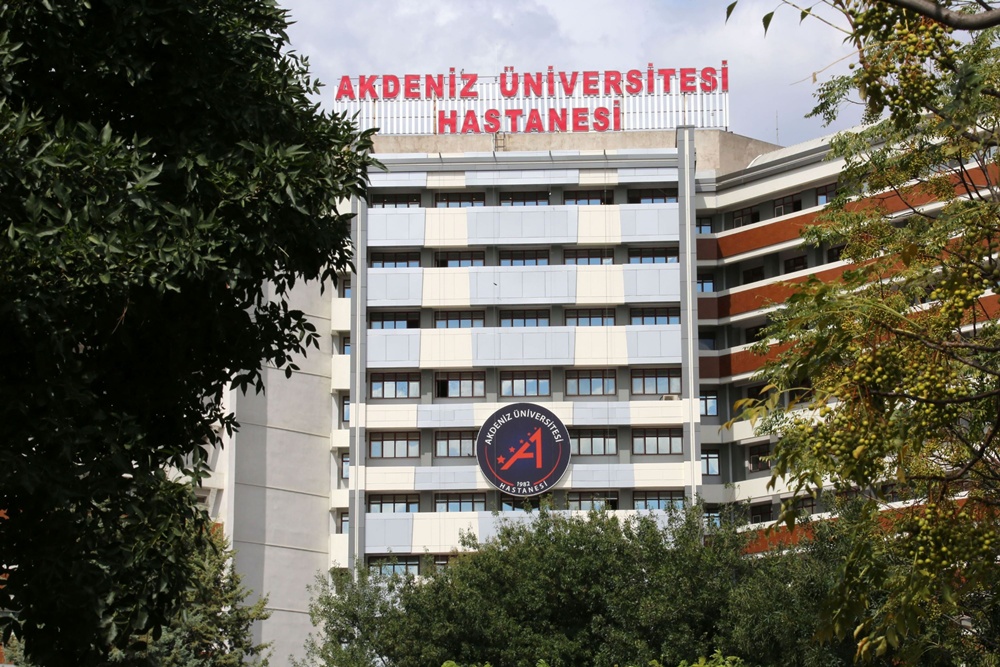
Akdeniz University Hospital continues its pioneering role in organ transplantation as the center where the world’s first cadaveric uterus transplant and Türkiye’s first double-arm and face transplants were performed. The center also carries out transplants involving numerous organs and tissues, including the liver, kidneys, heart, pancreas, corneas, and small intestine.
Behind these achievements are not only surgical techniques, but also stories that have transformed patients’ lives.
Uğur Acar, the recipient of Türkiye’s first face transplant, received his new face in an 11.5-hour operation performed at Akdeniz University Hospital in 2012.
Acar’s story demonstrated that an organ donation can change not only the course of a surgical procedure, but a person’s entire life.
At Akdeniz University, 126 kidney, 29 liver, and 10 heart transplants were performed in 2025. With the launch of lung transplantation, the center has become one of the institutions where a wide range of different organ transplants can be performed within the same healthcare ecosystem.
- Hope for eight patients at the same time in Malatya
Another world-class achievement in organ transplantation was accomplished at İnönü University.
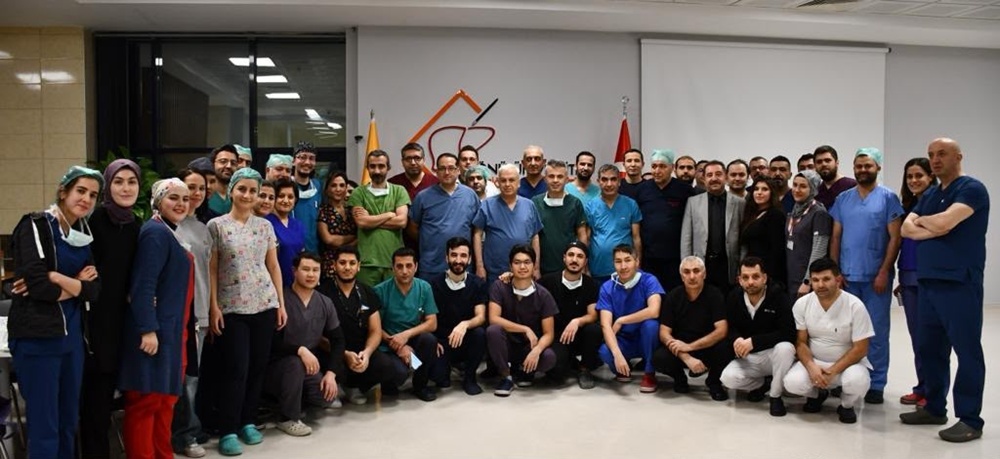
The Turgut Özal Medical Center Liver Transplant Institute performed the world’s first simultaneous eight-way paired liver exchange. In the procedure, donors and recipients who were not directly compatible were matched in different pairings to form a chain. Sixteen operations were performed simultaneously, with more than 150 healthcare professionals involved.
The operation lasted around 22 hours and offered new hope to patients waiting for organs whose conditions had reached critical levels.
The principle behind paired exchange transplantation is that even if a patient’s relative cannot donate an organ directly to that patient, they may be able to donate to another patient. In this way, an incompatibility within one family can lead to a match that saves another family’s life.
The Liver Transplant Institute at İnönü University had previously performed four-, five-, six-, and seven-way paired liver exchanges. Around 5,000 liver transplants have been performed at the university’s Turgut Özal Medical Center.
At the heart of these achievements, however, is the human factor before the technology.
In multi-way paired exchanges, the goal is not simply to perform a larger number of operations, but to offer patients who have been waiting for organs for a long time or whose conditions have become critical a new chance at life.
- Medical technology reshaping lives
The impact of advanced medical practices is sometimes seen less in the technical specifications of a device than in the change they bring to a patient’s life.
At Farabi Hospital of Karadeniz Technical University, the facial deformity suffered by 16-year-old Samet Çağlar following a traffic accident was analyzed using CT imaging and 3D modeling. Missing tissues were identified, a patient-specific implant was designed, and the facial deformity was corrected through surgery.
At the Faculty of Medicine of Gazi University, a technique jointly developed by neurosurgery and otorhinolaryngology specialists enables certain brain tumors to be treated through the nostrils.
Previously requiring the skull to be opened in some cases, the technique allows physicians to reach the tumor through an endoscopic route via the nose in suitable patients. It helps preserve the patient’s hearing and facial nerves while reducing both surgery and hospital stay times.
The collaboration of different medical specialties in treating the same patient stands out as one of the defining features of university hospitals.
- Targeting the patient in cancer treatment
Advanced healthcare practices at university hospitals are also opening up new possibilities in cancer treatment.
The CAR-T Cell Therapy Manufacturing Center established at Akdeniz University Hospital enables the development of personalized treatments for certain types of cancer based on specially preparing patients’ own immune cells in a laboratory setting.
The ZAP-X system used at Hacettepe University enables precision radiation treatment for brain tumors, aiming to protect surrounding healthy tissue as much as possible. Gamma Knife and Tomotherapy at Pamukkale University, and CyberKnife at Bursa Uludağ University, are used to deliver precise radiation to tumor sites.
Gallium-68 PET/CT and AI-assisted MRI at İnönü University, and AI-assisted digital PET/CT at Gazi University, support physicians in detecting cancerous tissue.
In this way, technology contributes not only to earlier or more accurate detection of disease, but also to tailoring treatment to the characteristics of individual patients.
- Homegrown technology also comes to life in university hospitals
University hospitals also play an important role in transferring domestically developed healthcare technologies into clinical use.
At Gaziantep University Şahinbey Research and Application Hospital, four clinical applications were successfully performed using the domestically developed LIFELINE HLM heart-lung machine developed by ASELSAN. One of these procedures involved triple-vessel coronary artery bypass surgery, while another involved minimally invasive heart valve replacement.
These examples demonstrate that university hospitals are not merely healthcare institutions that use existing technologies; they also play a role in transferring newly developed healthcare technologies into clinical practice.
- 308 lives transformed through heart transplantation
Ege University Hospital is also among the leading centers in advanced cardiac surgery and transplantation.
Since performing its first heart transplant in 1998, the Department of Cardiovascular Surgery at the Faculty of Medicine of Ege University has carried out 308 heart transplants over 28 years. Artificial heart support devices are also used to help patients awaiting heart transplants survive until a suitable organ becomes available. To date, around 850 patients at the center have received artificial heart support devices.
The daughter of Gülizar En, who underwent a heart transplant at the hospital 14 years ago, also received a heart transplant from the same team last year, allowing her to survive. In this way, a success experienced by one patient years earlier ultimately helped save another life within the same family.
- Advanced treatments expanding across Anatolia
An important aspect of the healthcare capacity of university hospitals is the expansion of advanced treatment methods to different regions.
At Afyonkarahisar Health Sciences University, choledochoscopy, a technique being used in the region for the first time, enables direct visualization of the bile ducts. The method makes it possible to assess stones, strictures, and blockages and, in some cases, allows patients to be treated without open surgery or referral to other centers.
At Çanakkale Onsekiz Mart University, a patient with severe tracheal stenosis underwent laryngotracheal resection and anastomosis. The operation, which can be performed at only a limited number of centers in Türkiye, was carried out in Çanakkale for the first time.
Robotic surgery is also becoming increasingly widespread across different specialties at university hospitals, while specialized procedures such as robotic surgery, advanced radiotherapy, and interventional cardiac treatments are being performed at Kocaeli University, Çukurova University, Erciyes University, Selçuk University, Trakya University, and Tekirdağ Namık Kemal University.
AI-assisted MRI and digital angiography are being used in Karabük; robotic surgery and advanced endoscopic imaging in Balıkesir; AI-assisted 3 Tesla MRI and neuromodulation procedures in Mersin; robotic surgery at Harran and Fırat universities; and PET/CT and advanced radiotherapy techniques at Tokat Gaziosmanpaşa University.
Robotic neurosurgery and a three-dimensional robotic-arm exoscope are being used at İbni Sina Hospital of Ankara University; endoscopic craniosynostosis treatment and ECMO at Sivas Cumhuriyet University; complex pediatric cardiac surgery at Aydın Adnan Menderes University; advanced microsurgery at Dicle University; stroke treatment and organ transplantation at Eskişehir Osmangazi University; and advanced molecular genetic diagnosis and specialized vascular treatments at Marmara University.
Mersin University provides neuromodulation and advanced pediatric cardiology services; Balıkesir University performs robotic surgery and advanced endoscopy; Erzincan Binali Yıldırım University uses AI-assisted imaging and provides specialized surgical procedures; Tokat Gaziosmanpaşa University offers advanced radiotherapy and PET/CT; Harran University and Fırat University perform robotic surgery; and Kırşehir Ahi Evran University provides advanced physical medicine and rehabilitation services supported by geothermal resources.
- Healthcare capacity strengthened in the earthquake region
University hospitals in the earthquake-affected region are also playing an important role in maintaining tertiary healthcare capacity.
Following the February 6 earthquakes, Kahramanmaraş Sütçü İmam University Hospital expanded its bed capacity and commissioned new operating rooms, AI-assisted MRI, a dialysis unit, and a stroke center. The hospital also performs specialized procedures such as endoscopic heart valve surgery, corneal transplantation, and cochlear implantation.
Dursun Odabaş Medical Center of Van Yüzüncü Yıl University provides healthcare services to approximately 3 million people in the region.
- Treating patients while training the doctors of tomorrow
The distinctive role of university hospitals within the healthcare system stems from the fact that treatment, education, and research are conducted within the same ecosystem.
Scientific knowledge and academic expertise generated at universities are directly transferred to diagnosis and treatment processes, while the clinical experience accumulated in hospitals contributes to training the doctors and specialists of the future.
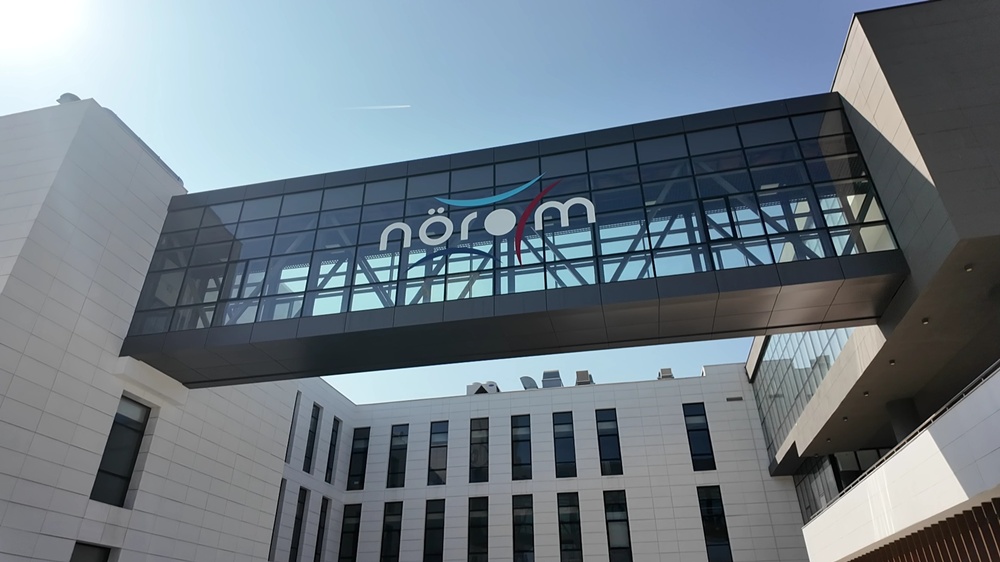
R&D activities conducted at the Neuroscience and Neurotechnology Center of Excellence (NÖROM), the AI and simulation infrastructure of the New Cerrahpaşa Project, virtual reality and surgical simulation applications at Bursa Uludağ University, and early-phase clinical research at Hacettepe University are among the examples where healthcare services and scientific research come together within the same structure.
- “University hospitals are centers that generate knowledge and expertise”
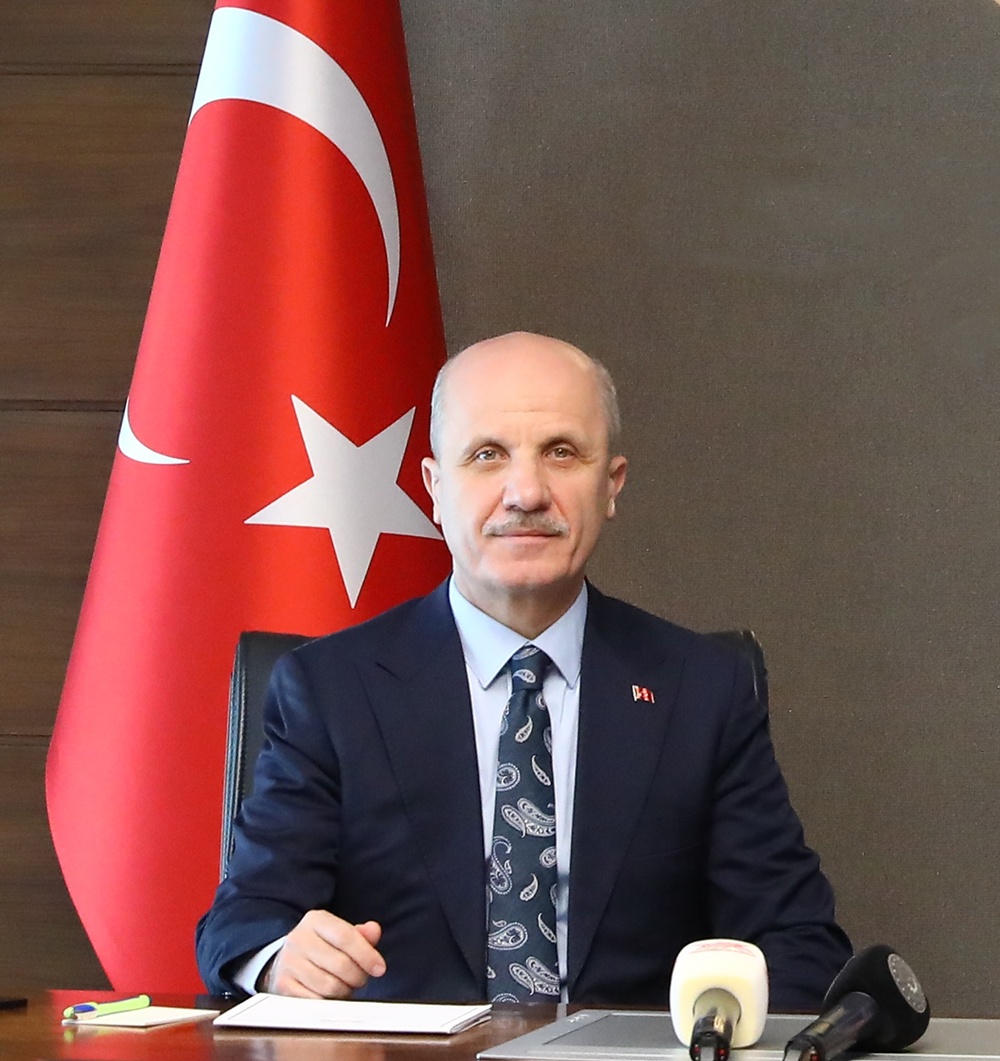
CoHE President Erol Özvar stated that university hospitals, with their strong academic teams, accumulated knowledge, and advanced healthcare infrastructure, are among the key components of Türkiye’s healthcare capacity.
Noting that the direct transfer of knowledge and expertise generated through universities’ education and research activities into healthcare services makes an important contribution to the development and expansion of advanced medical practices, Özvar emphasized that university hospitals are also centers that combine the functions of treatment, research, technology development, and training healthcare professionals.
Özvar stated that more effective use of university hospitals’ academic expertise and technological capabilities would contribute to providing highly specialized healthcare services in different regions of Türkiye and further strengthening the country’s healthcare capacity.
Images
Images