


CoHE President Özvar Delivers Message to Rectors on Curriculum and ECTS
December 10, 2025
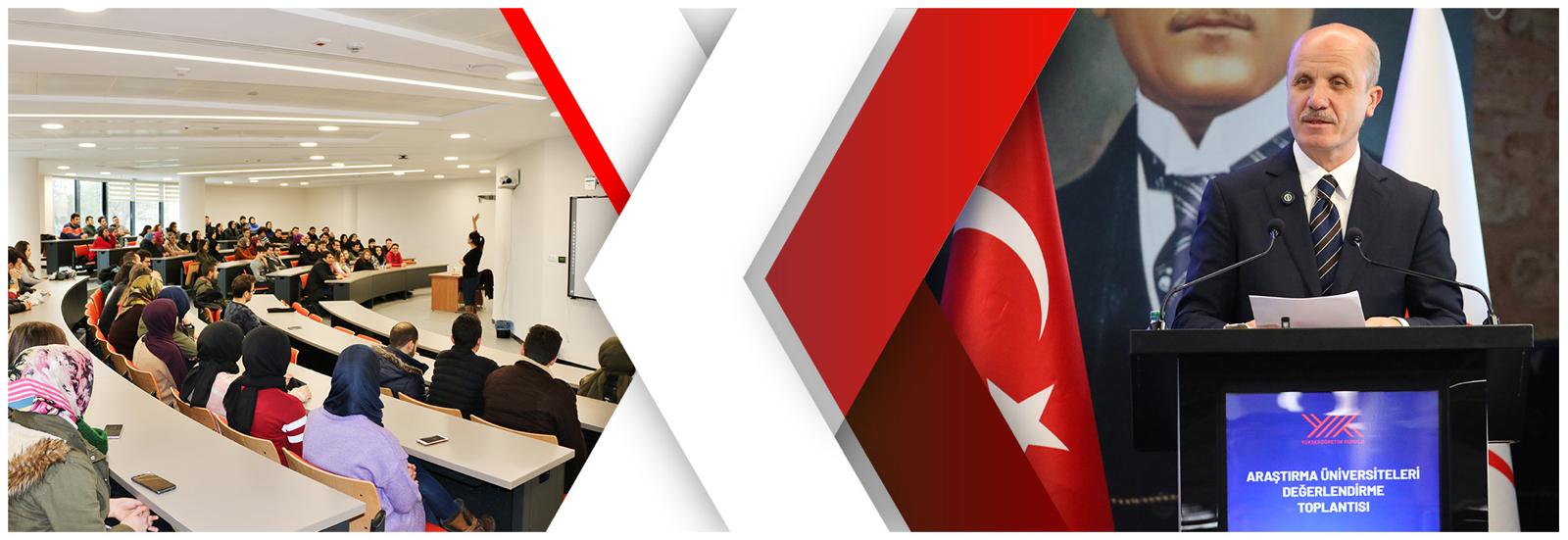
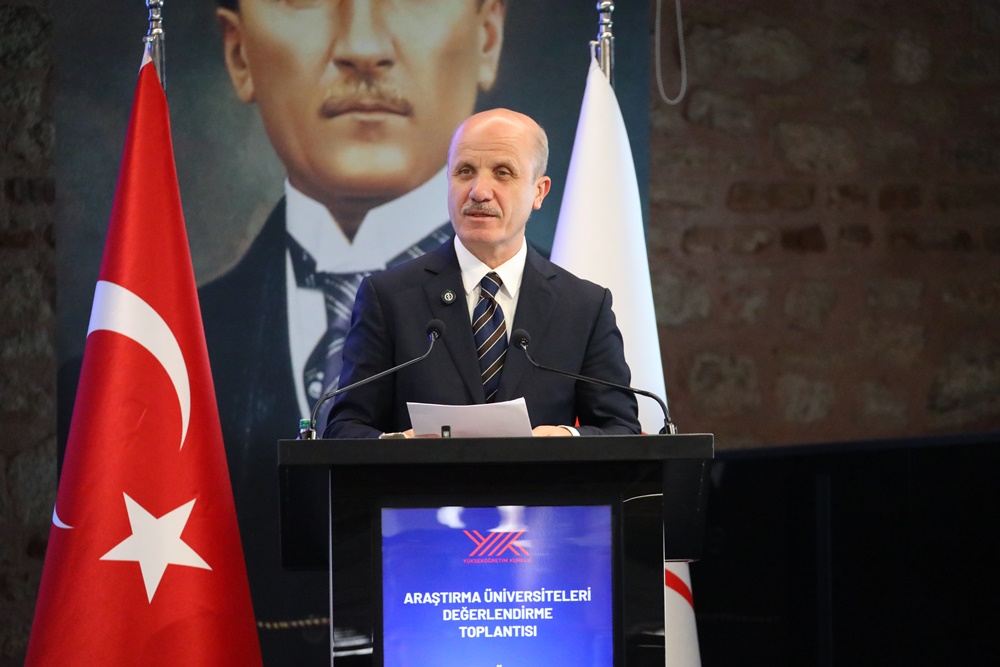
President of the Council of Higher Education (CoHE) Erol Özvar shared a new roadmap aimed at improving the quality of education during a meeting with the rectors of research universities.
Stating that they want to make universities’ educational processes more efficient, Özvar emphasized that weekly course schedules and the structure of the European Credit Transfer and Accumulation System (ECTS) need to be updated.
Noting that current course schedules provide an opportunity to update the credit system, Özvar said, “Our main goal is to make weekly course plans and the curriculum much more effective and higher in quality.”
Inviting university administrations to contribute to the transformation process, Özvar called on rectors by saying, “Let us review the curriculum and ECTS together and pave the way for you.”
Stating that this issue will be one of the priority agenda items in the coming days, Özvar said, “Let us provide opportunities to our universities that are working on ECTS. Reconsider the ECTS workload and the curriculum at your own university. You carry out the work on this issue, and the Council of Higher Education will pave the way for you. Let us carry out this process together.”
A “long-term” model begins in applied education
Özvar also emphasized that, in order to better prepare students for the business world, the system will shift from short internships lasting 20–25 days with low efficiency to a “long-term workplace-based applied education” model.
Stating that this model will be implemented particularly in vocational programs that include applied education, Özvar announced that the new system will start with a pilot implementation in seven provinces.
What is ECTS?
ECTS is a workload unit that expresses all the work a student must complete in order to successfully finish a course (theoretical classes, practical work, seminars, individual study, examinations, etc.), and it is used to facilitate student mobility and to equalize educational standards.
In Türkiye’s current higher education system, at least 120 ECTS credits are required to graduate from associate degree programs (2 years), and at least 240 ECTS credits are required to graduate from undergraduate programs (4 years).
The Council of Higher Education continues its efforts to reduce the intensity of theoretical courses in order to open up more space for practical training for students, increase integration with industry and the business world, simplify curricula, and review the ECTS credit limits, as seen in some examples in Europe.
Images

Images