


“ANKOSLink 2025 International Conference” Takes Place at Presidential Nation’s Library with Theme “Library 5.0 and Human-Centered Digital Transformation”
November 4, 2025
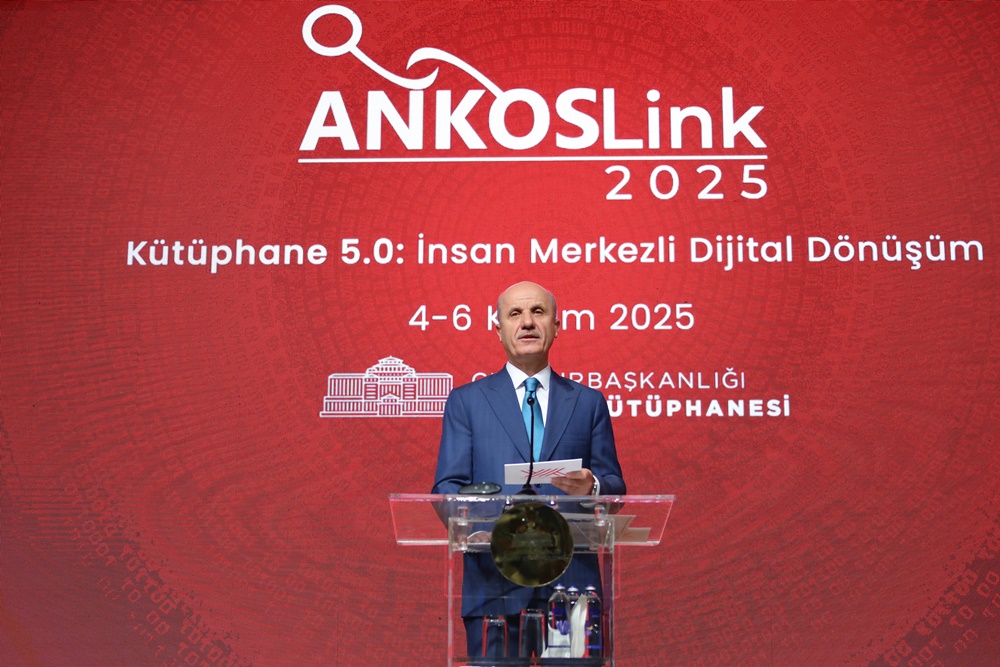
President of the Council of Higher Education (CoHE) Erol Özvar announced that they are conducting a comprehensive legislative study to determine how and to what extent AI should be used in theses, articles, and other academic works. Özvar emphasized that this initiative will establish an ethical, auditable, and transparent governance framework for the use of AI within the higher education system.
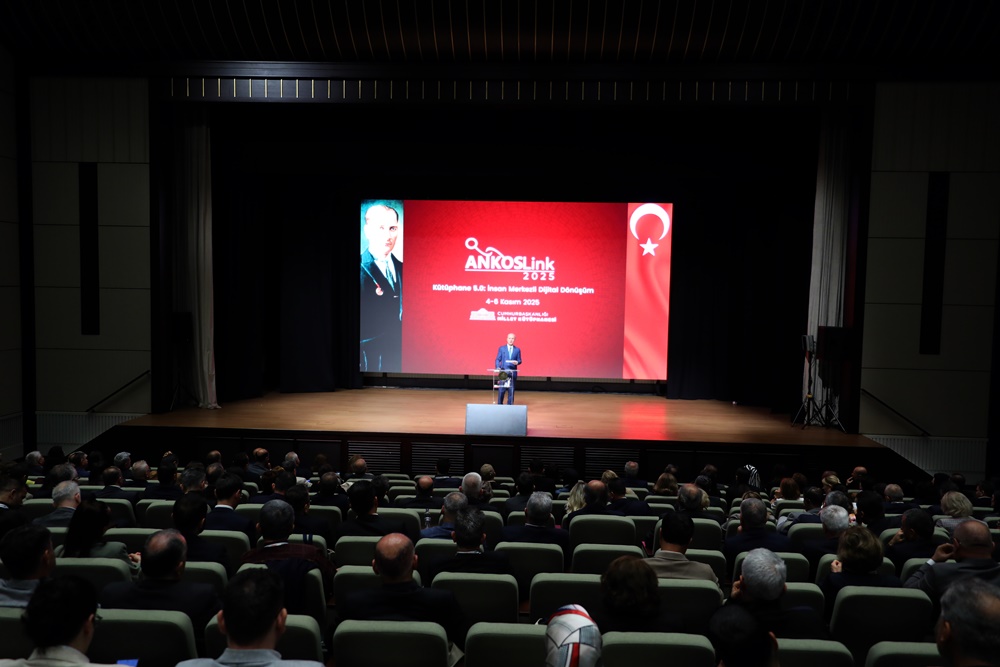
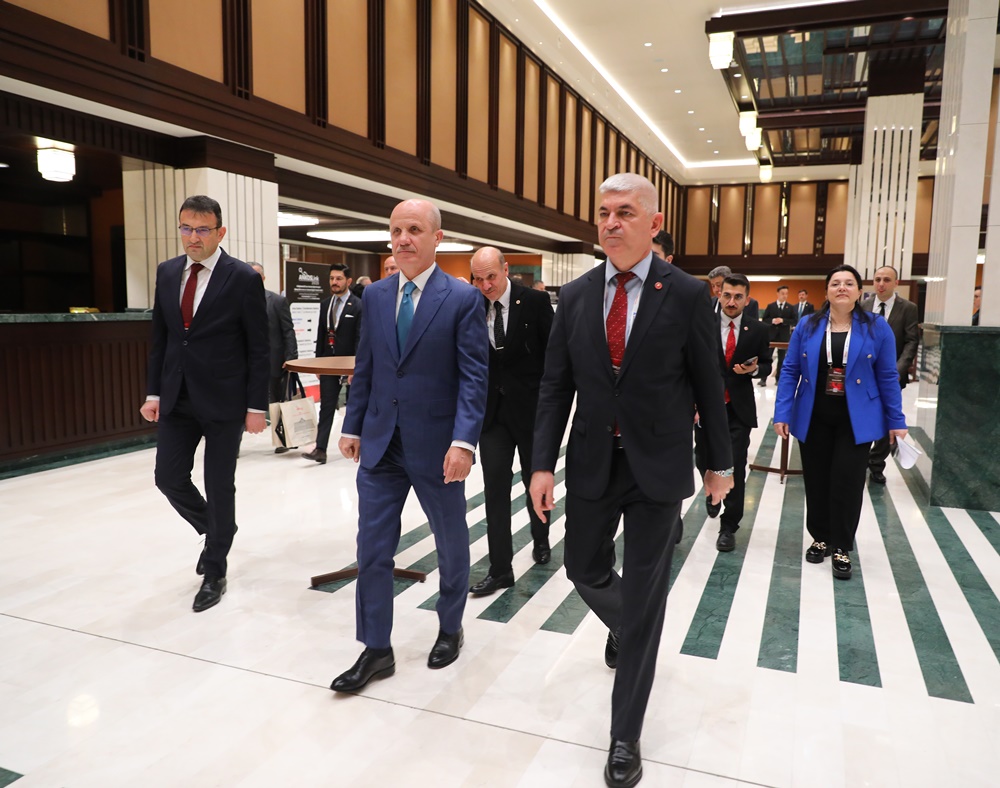
The “ANKOSLink 2025 International Conference”, organized by the Anatolian University Libraries Consortium (ANKOS), was held at the Presidential Nation’s Library under the theme “Library 5.0 and Human-Centered Digital Transformation.”
In his speech at the conference, Özvar stated that supporting every innovation that puts the power of knowledge at the service of humanity, and guiding Türkiye’s digital transformation process in a scientific, ethical, and sustainable manner, is one of their primary missions.
He emphasized that positioning libraries, universities, and research institutions at the heart of this transformation would become one of the strongest pillars of Türkiye’s vision for knowledge-based development.
Noting that artificial intelligence, big data, digital content production, and automation technologies are reshaping the information ecosystem, Özvar stated that during this transformation process, libraries, publishing houses, and academic institutions are becoming the architects of a new information society that manages, interprets, and serves knowledge for humanity.
Özvar underlined that Türkiye’s higher education system is now engaged not only in adapting to digital transformation but also in shaping and leading it through a strategic restructuring process.
He explained that the Council of Higher Education approaches every stage of this process, from policy to practice, from vision to implementation, with an integrated perspective. Özvar emphasized that Turkish universities today are not only knowledge producers but also institutions shaping the values of the digital age and pioneering human-centered technological transformation. He added that Türkiye’s knowledge strategy is based on the global, barrier-free, non-monopolized, and borderless sharing of information.
Özvar pointed out that one of the four main pillars of the 2030 Vision, prepared by the Council of Higher Education and shared with universities, is “Digital Transformation and Data-Driven Management.” In this context, Özvar highlighted that strengthening the digital infrastructure of universities, embedding data-driven decision-making mechanisms into institutional culture, and expanding open science and digital learning platforms stand out as essential components for building the university of the future.
He stated that achieving these goals would enable students and academics to acquire digital competencies that will enhance their competitiveness on a global scale.
Referring to the “Ethical Guide on the Use of Generative Artificial Intelligence in Scientific Research and Publication Activities of Higher Education Institutions,” published last year, Özvar said that it represented an important step for universities. He added that they are now advancing this work through a comprehensive legislative framework, and that the necessary regulations and legal arrangements will enter into force in the shortest time possible. Thus, Özvar concluded, the higher education system will gain an ethical, auditable, and transparent governance structure for the use of artificial intelligence.
Images
Images