



2025 YKS Placement Results Announced
August 25, 2025
The 2025 YKS placement results have been announced. Placement scores were calculated for 2,310,599 of the 2,560,649 candidates who took the exam. Of these, 1,412,734 made preferences to be placed in the approximately 840,000 quotas determined for this year.
Taking into account all full-time, open education, and distance learning programs, a total of 785,186 of the 1,412,734 candidates who made their selections won the right to be placed in a higher education institution.
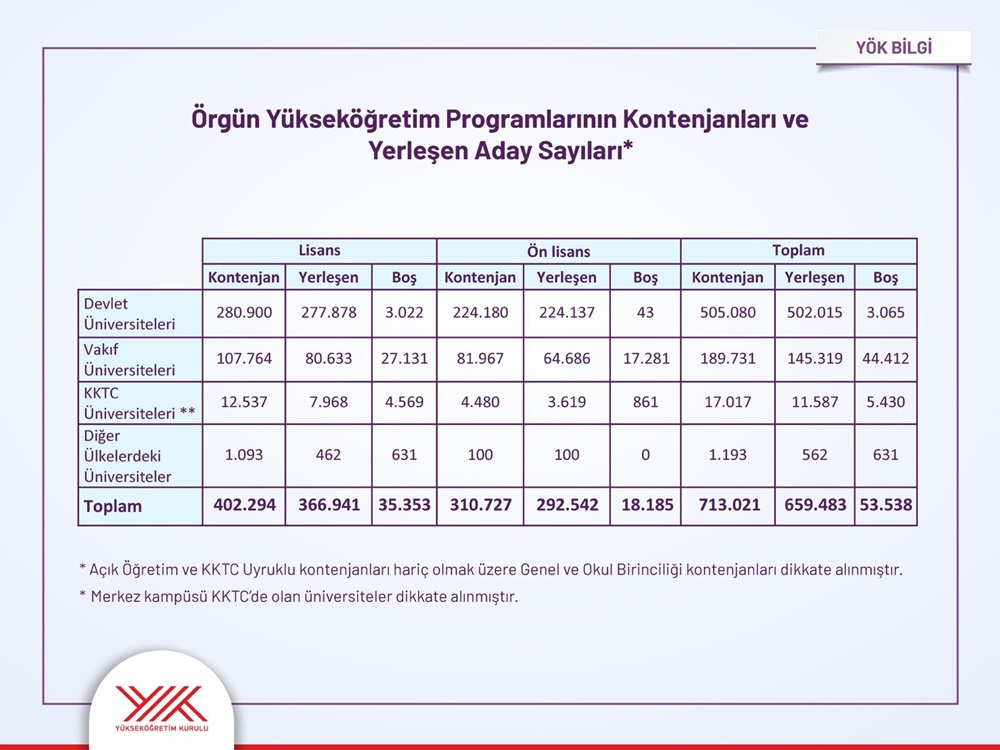
According to the initial placement data, the number of candidates who earned the right to enroll in full-time associate and bachelor's degree programs at Turkish state and foundation universities was 665,054, while the total number of unused quotas was 53,338.
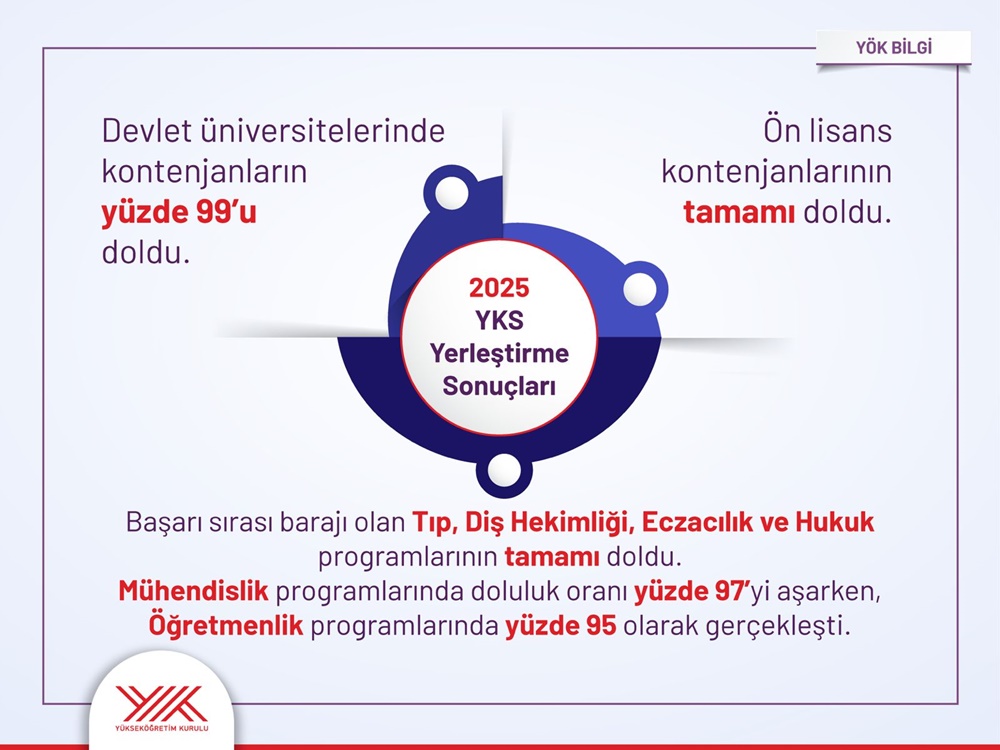
Of the total 521,024 quotas allocated to regular higher education programs at state universities, 515,521 were used, resulting in a high occupancy rate of 99%.
The occupancy rate for general places at foundation higher education institutions was 75.8%.
The total quota of 100,907 for open education programs and 9,059 for distance learning programs at state universities was used, while the occupancy rate for the 1,224-person quota allocated to distance learning programs at foundation universities reached 95.3%.
The general quotas for Medicine, Dentistry, Pharmacy, and Law programs, which have a minimum grade requirement and are located on the domestic campuses of state universities, were completely used, while the occupancy rate for Engineering programs exceeded 97% and the occupancy rate for Teacher Training programs was 95%.
The general quotas for Mathematics, Physics, Chemistry, Biology, History, Geography, Psychology, Management Information Systems, Economics, Business Administration, and Economics programs at state universities, which do not have a minimum grade requirement, were completely used.
The occupancy rate for programs with a success threshold at foundation universities was 72 percent, while the occupancy rate for programs without a success threshold was 77 percent.
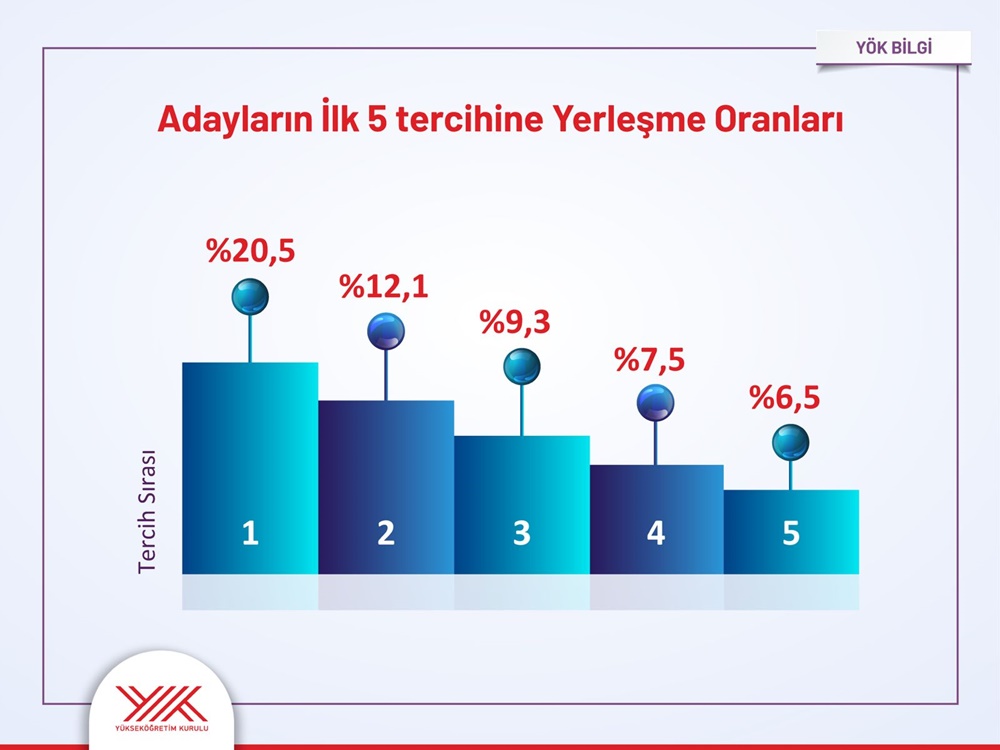
According to the placement results, 20.5 percent of candidates were placed in their first choice. The rate of those placed in their second choice was 12.1%, and the rate of those placed in their third choice was 9.3%. Thus, 42% of candidates were placed in one of their first three choices.
The rate of those placed in their fourth choice was 7.5%, and the rate of those placed in their fifth choice was 6.5%. Accordingly, 56% of candidates were placed in one of their first five choices.
“Our policies have yielded positive results”
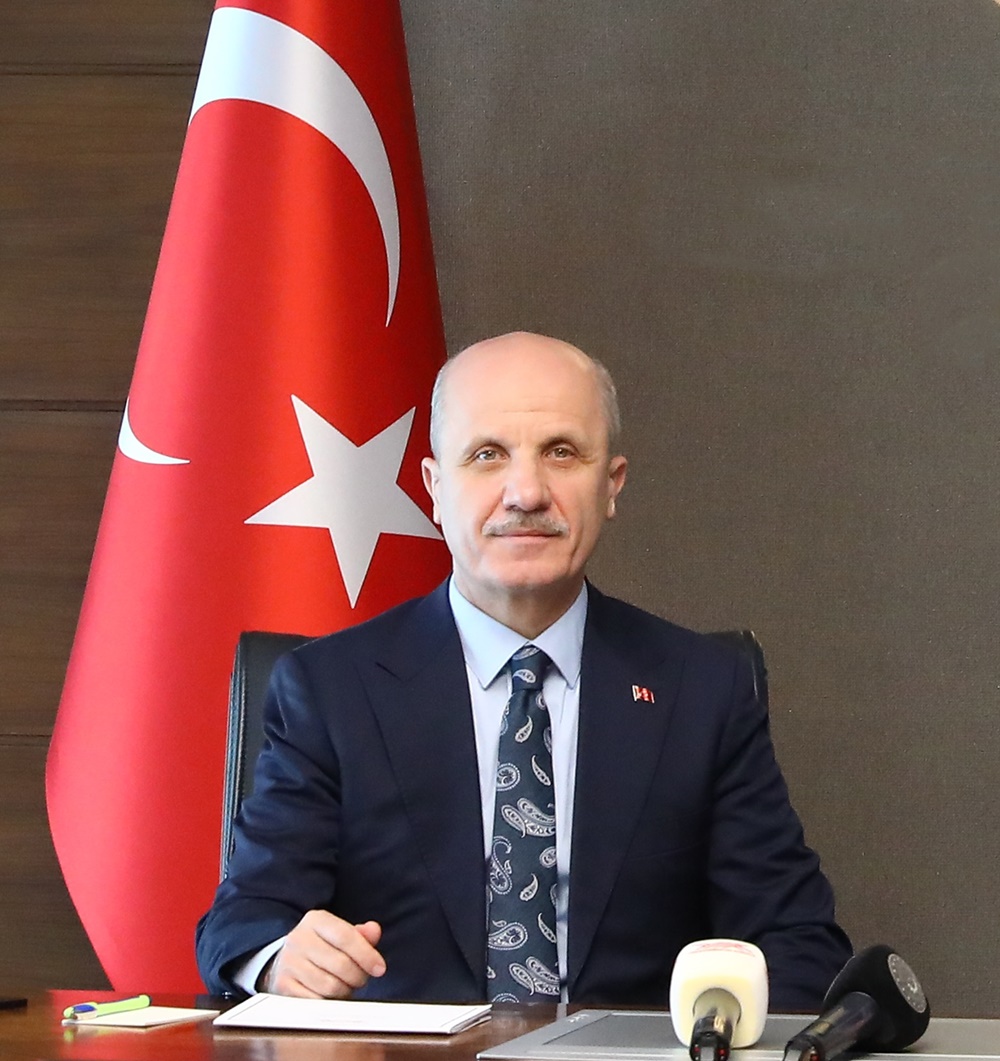
In his assessment of the results, Erol Özvar, President of the Higher Education Council, stated that the demand for access to higher education continues to be extremely strong, adding, “We are pleased to see that the policies we have pursued in recent years to respond effectively and inclusively to this demand have yielded positive results.”
He emphasized that they continue to open new programs and transform existing ones, taking into account the demand for access to higher education, the employment goals of the public and private sectors, vocational education, and future professions and strategic areas, particularly digital technologies and artificial intelligence.
“We develop strategies taking into account the expectations of all sectors.”
Stating that they have developed new strategies taking into account the expectations of all sectors in the country in order to achieve their goals, he said, “With this understanding, we are carrying out comprehensive studies and projects aimed at improving the quality of education and training at our vocational schools, developing their infrastructure, and increasing internship opportunities.”
CoHE President Erol Özvar wished the results to be beneficial for the candidates, their families, and the country, and congratulated all candidates who earned the right to enroll at universities. Advising candidates who did not gain admission to make the most suitable plans for their future and to start working towards achieving them, Özvar thanked all institutions, organizations, and individuals who contributed to the successful and secure execution of all processes from the start of the exam schedule to the present day.
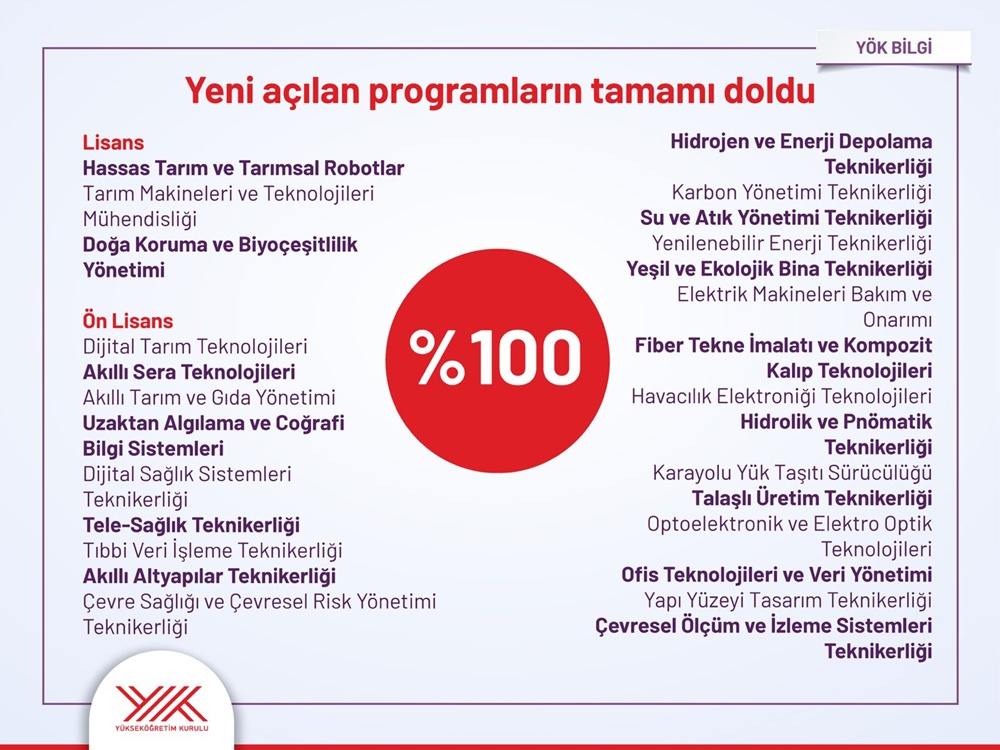
-High Demand for Future Careers: Not a single quota left unused in newly opened employment-focused programs-
Erol Özvar announced that all quotas in 27 programs, opened for the first time this year and set to play a critical role in both today's and tomorrow's labor market, have all been used at state universities.
He stated that the Council of Higher Education has focused primarily on designing new programs based on artificial intelligence, big data, and information technology since last year, adding:
"In 2024, 72 artificial intelligence and digital-based programs at 20 universities accepting students for the first time attracted intense interest from applicants, with all programs reaching 100% occupancy rates. As a result of comprehensive evaluations and studies, the number of these programs increased further in 2025, and we launched undergraduate and associate degree programs based on artificial intelligence, big data, cybersecurity, and digital technologies at over 100 universities.
Alongside the programs launched last year and increased in number this year, we have launched programs focused on green transformation, energy efficiency, carbon management, nature conservation, and biodiversity; programs focused on digital technologies in agriculture, precision farming, and agricultural robots; and 27 new programs, three of which are bachelor's and 24 of which are associate degrees, focusing on areas such as digital infrastructure in healthcare, remote healthcare services, and medical data processing, were offered to applicants for the first time this year. All of these new programs, which will play a critical role in both today's and tomorrow's labor market, were chosen with a 100% occupancy rate at state universities in the 2025 YKS.
“We will continue our work in line with the Türkiye Century vision.”
Özvar said, "In line with President Recep Tayyip Erdoğan's Türkiye Century vision, we will continue to pursue our goal of being at the center of global change and transformation in strategic areas with a proactive vision and the same determination. The successes we have achieved to date are a strong source of hope for the future of our country and our higher education system."
Özvar reported that, according to the YKS results, the percentage of candidates who did not make any selections despite having the right to do so was 40% among all candidates and over 50% among final-year students.
He stated that the rate of selection among candidates who graduated from secondary education in previous years but did not enroll in any higher education program was 72%.
“Candidates who have not been placed should follow the additional placement process.”
Özvar stated that the registration period at universities will now begin following the selection process, adding, "I invite all candidates who have been successfully placed in a program to register and take advantage of the opportunities offered by university life. University life offers our young people an experience that opens up unique horizons in cultural, artistic, sporting, and social terms, along with an exceptionally valuable diploma. Therefore, this opportunity, obtained at the end of such a competitive process, must be taken advantage of."
Özvar noted that there is still hope for candidates who were not placed in any program, saying, “In the additional placement process, these candidates will have the chance to make new choices for the limited number of remaining quotas. I strongly recommend that they follow this process closely.”
Images
Images