


Healing Power of Art and Source of Inspiration Flourish on University Campuses
- The healing power of art and its role as a source of inspiration continue to thrive across university campuses.
- A total of 1,839 catalogued works of art—adorning hospital walls, faculty entrances, and green spaces—have transformed Hacettepe University into what is virtually an open-air museum.
- Dean of the Faculty of Architecture Prof. Meltem Yılmaz stated that the artworks displayed across the campus and hospitals serve as a source of inspiration for students and provide encouragement to those in healthcare settings.
June 7, 2026
Artworks displayed throughout Hacettepe University’s campuses, university hospital, and children's hospital inspire students, academics, patients, patients’ relatives, and visitors by bringing art into their daily lives.
Prof. Meltem Yılmaz, Dean of the Faculty of Architecture at Hacettepe University, noted that the visionary approach of the university’s founder, Prof. İhsan Doğramacı, who viewed art and science as complementary, has been reflected in the university’s campuses and hospital spaces since its earliest years.
Commenting on some of the most notable works across the campus, Yılmaz emphasized that Hacettepe University contributes to society not only through scientific output but also by making art visible and accessible in public spaces.
The university’s inventory includes a total of 1,839 works of art, consisting of 361 paintings, 63 sculptures, 3 busts, 4 figurative works, 9 engravings, 139 ceramic pieces, 24 prints, and various other artworks. Highlighting the importance of ensuring that artistic production reaches the public just as academic knowledge does, Yılmaz stated that the artworks displayed throughout the university’s campuses and hospital facilities inspire students while also providing comfort and encouragement to patients and their families.
- “Kim Yong Moon’s Final Work”
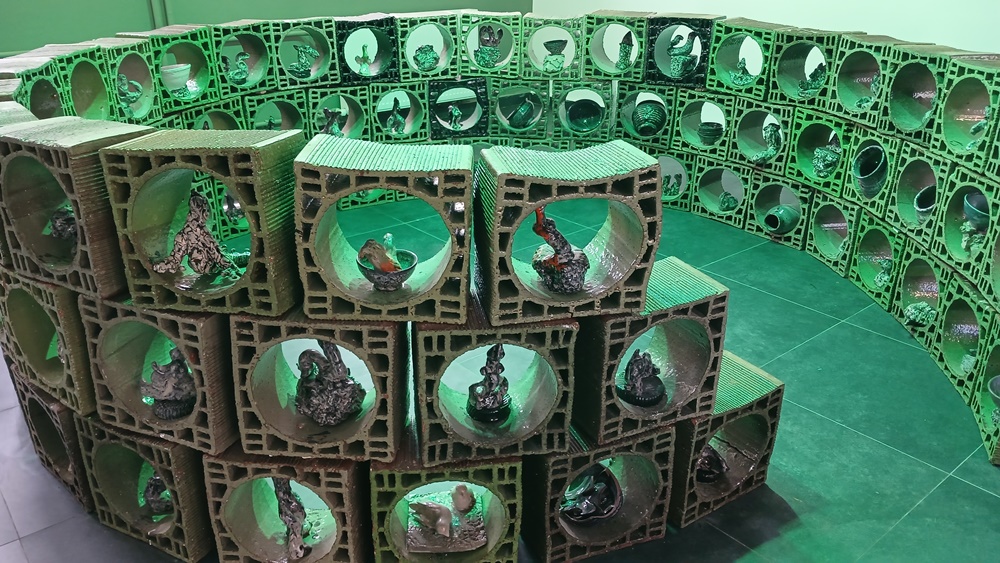
Yılmaz explained that Megaron, displayed at the entrance of the Faculty of Architecture, was created last year by Korean artist Kim Yong Moon, who taught for many years in the Department of Ceramics at the Faculty of Fine Arts. She noted that the artist glazed chimney bricks in green and placed different ceramic sculptures inside each brick. “This artwork is also a wonderful example of the integration of art and space,” she said. Yılmaz added that the artwork takes its name from Megaron, one of the earliest forms of residential architecture, and noted: “Megaron is Kim Yong Moon’s final artwork.”
- “It Created a Positive Impact on Campus Life”
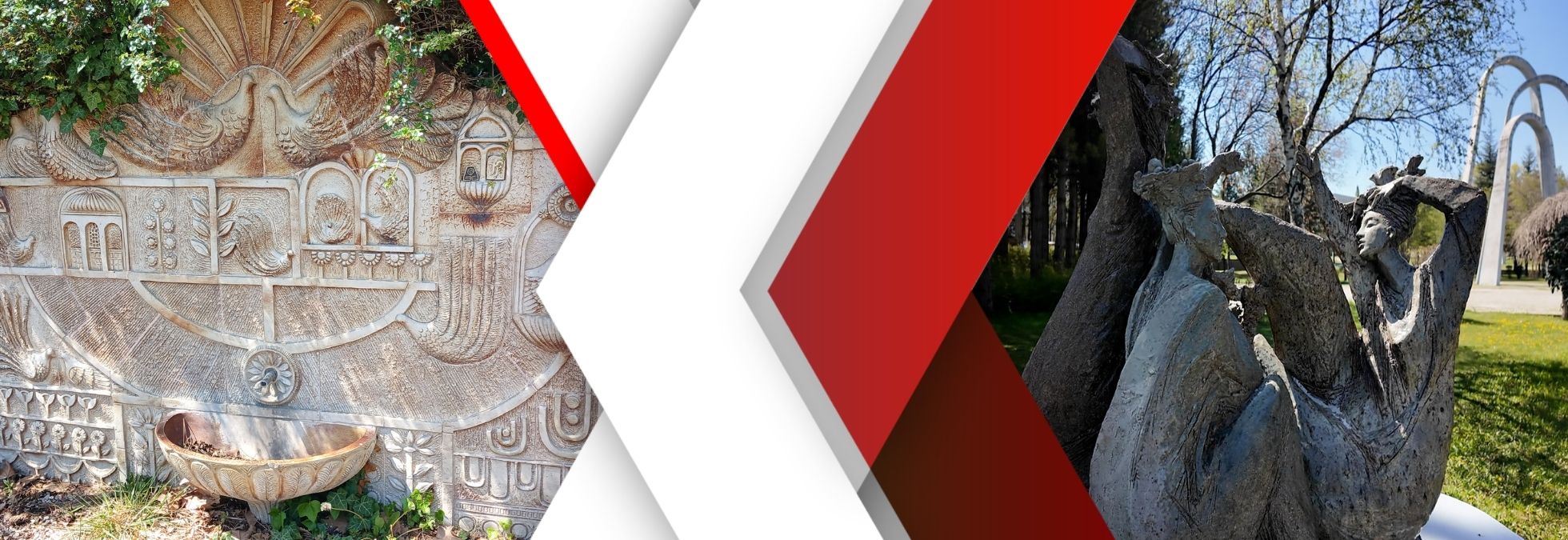
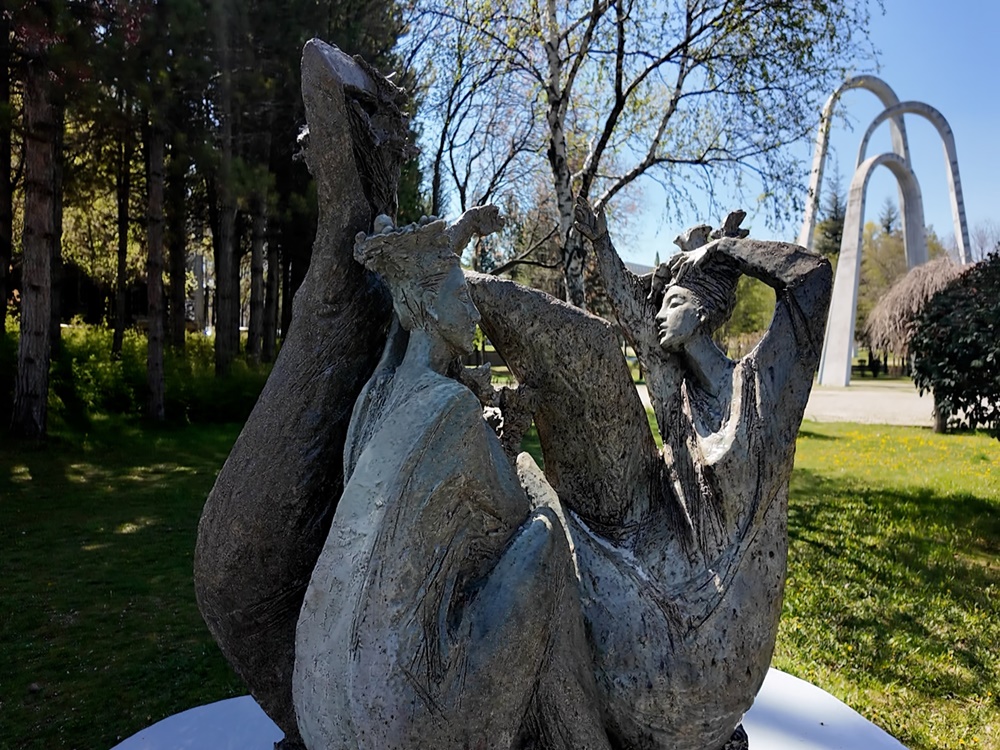
Referring to Three Women, a sculpture displayed outdoors on the Beytepe Campus, Yılmaz stated that it was created by Italian artist Gioela Suardi during the International Macsabal Symposium in 2014.
She explained that the artwork is significant because it demonstrates the durability of ceramic sculpture under outdoor conditions. “This sculpture created a positive impact within the Hacettepe community. During the winter, some of our trees bear red fruits. Students decorated the sculpture by placing those red fruits in the figures’ hands and on their heads,” she said.
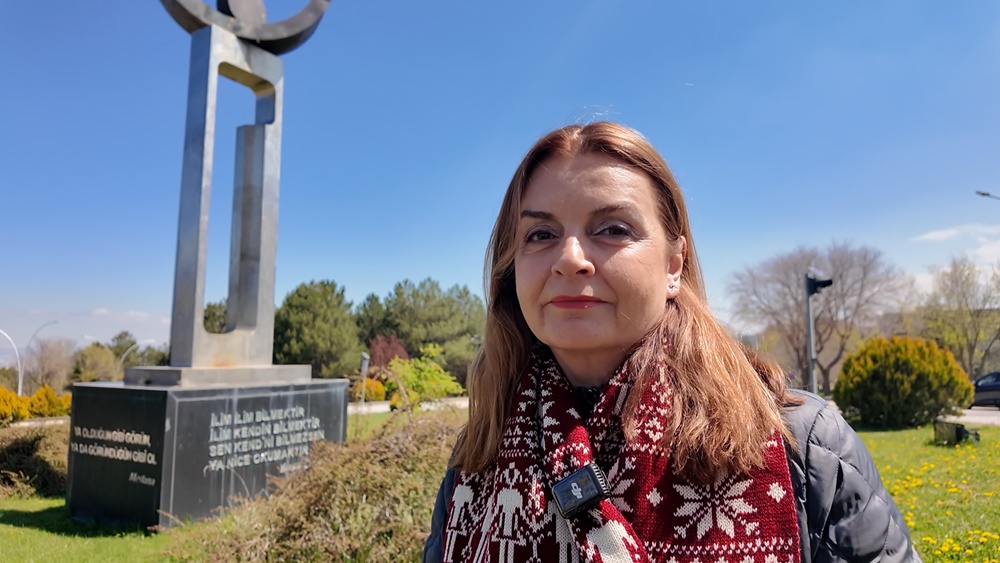
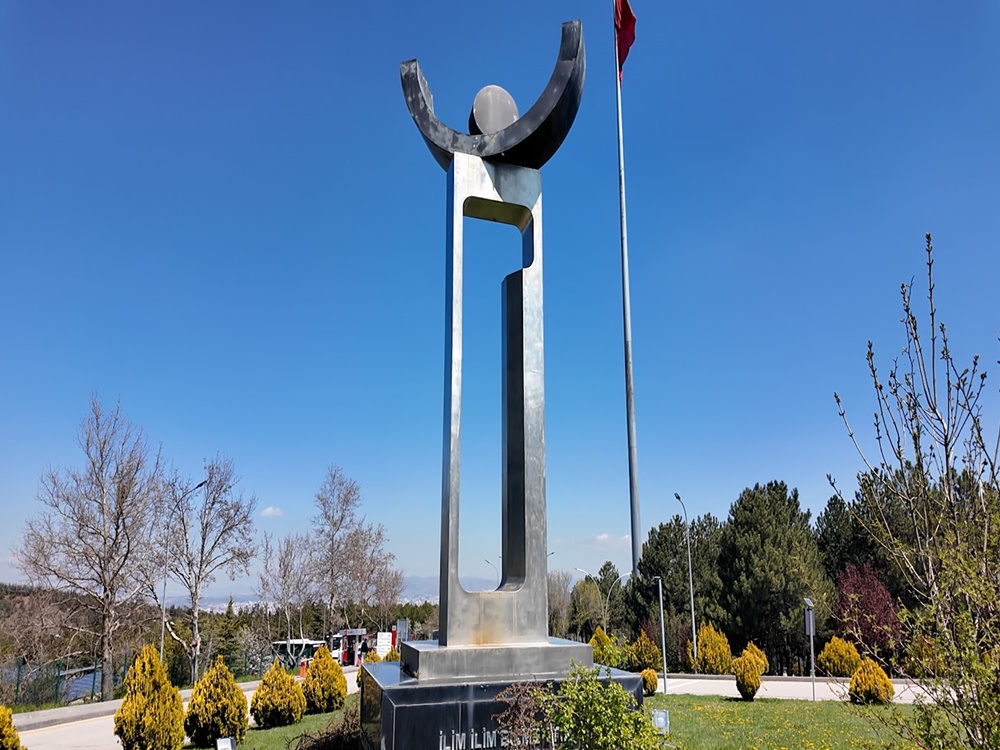
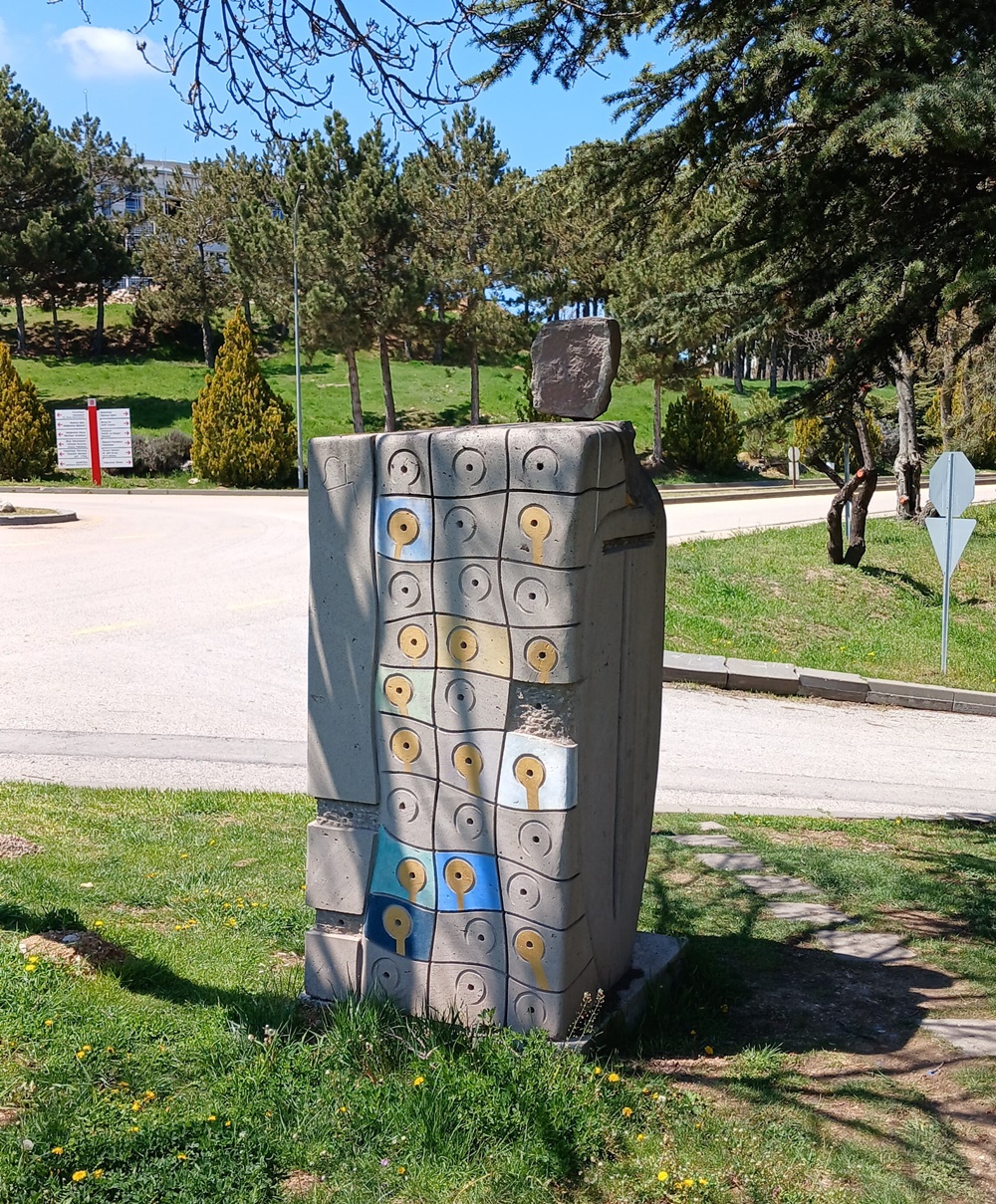
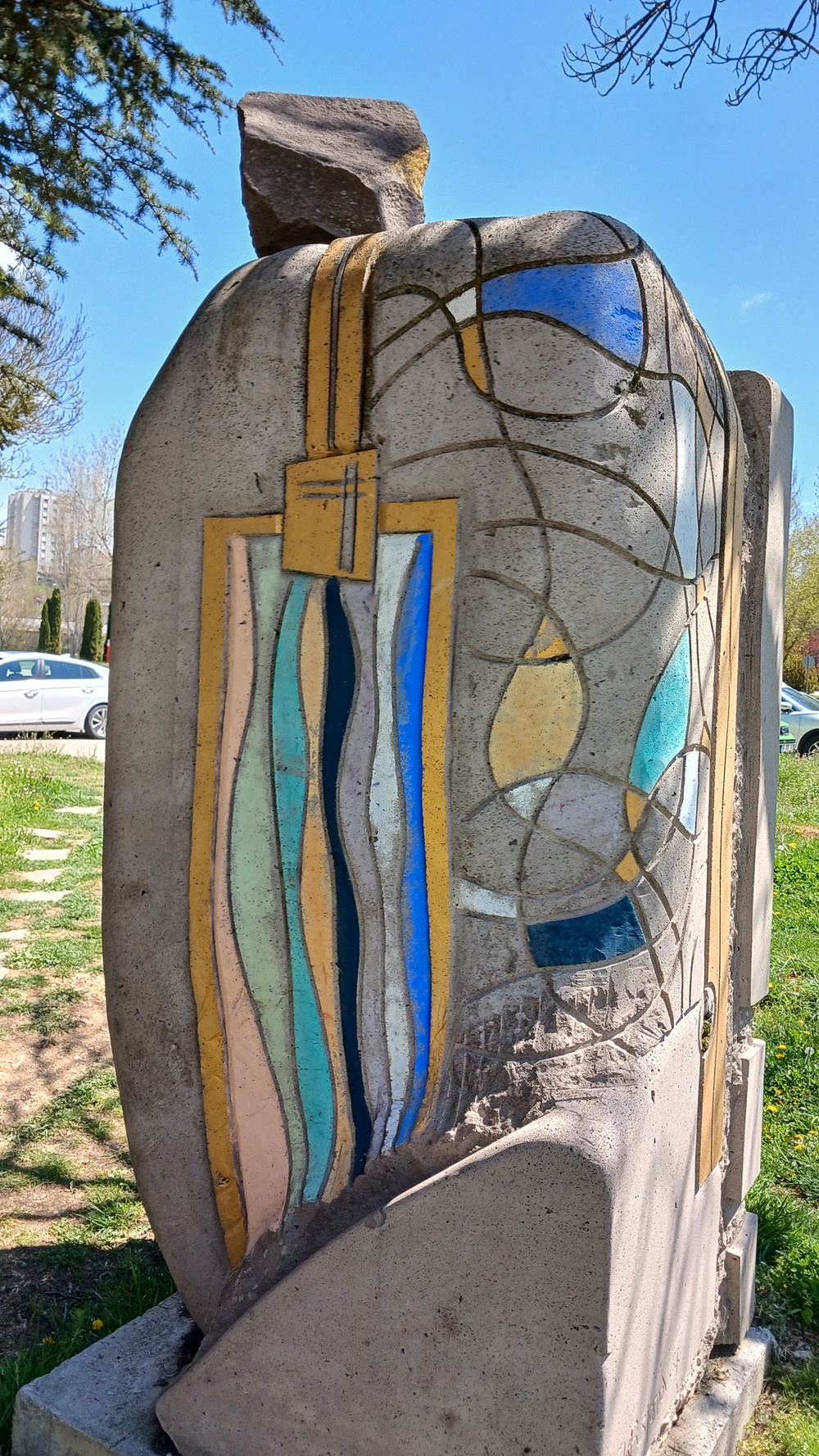
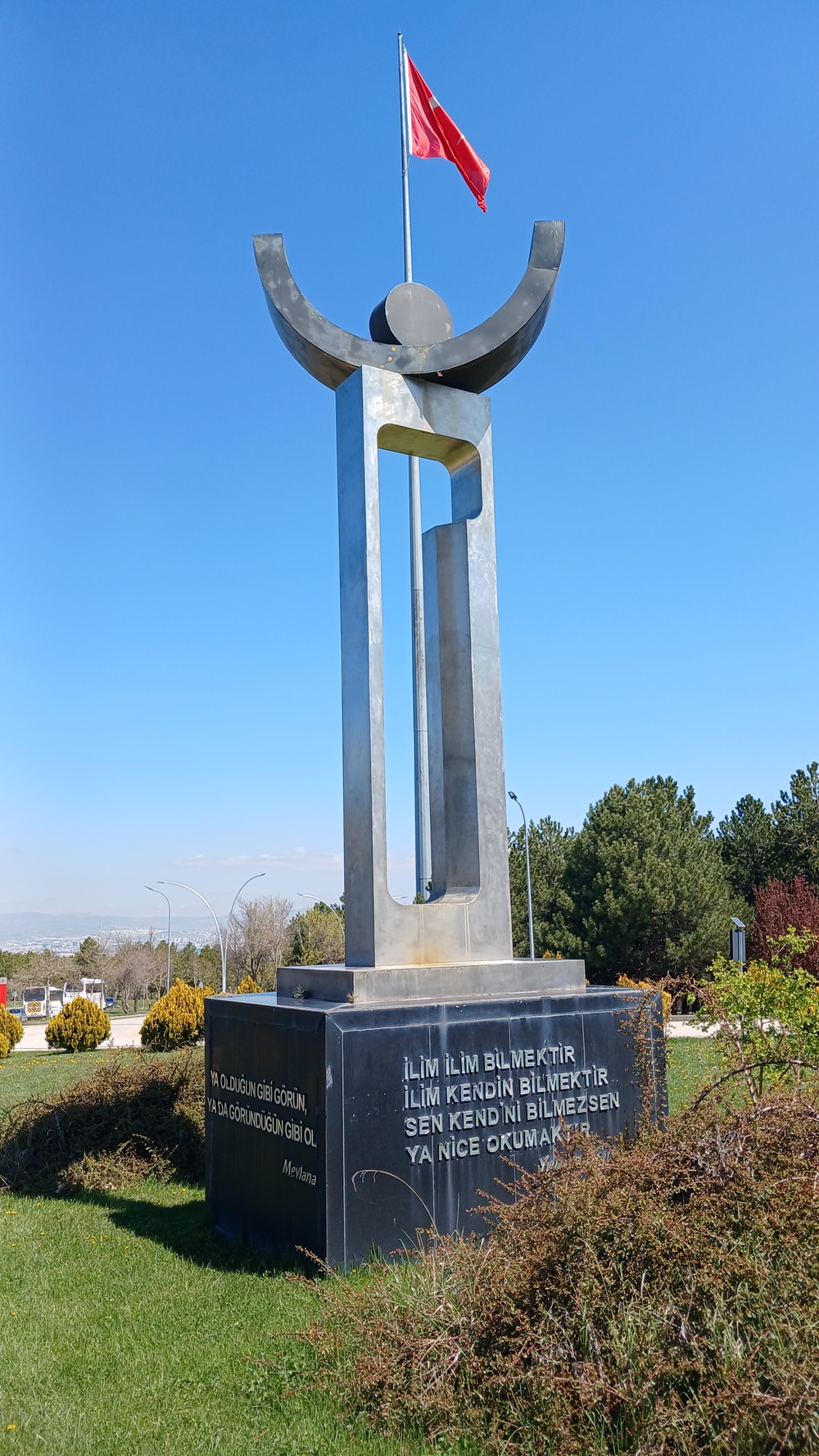
Yılmaz also discussed The Rise of Humanity, a sculpture located at a major intersection on campus. She noted that the artwork was created in 1999, designed by Hamiye Çolakoğlu of the Department of Ceramics and executed by Turhan Çetin.
Describing it as a powerful abstraction of the human form, Yılmaz said: “It symbolizes the rise and development of all young people studying at the university. Therefore, we can regard it as one of the university’s symbols.”
- “Love Is the Source of All Beauty”
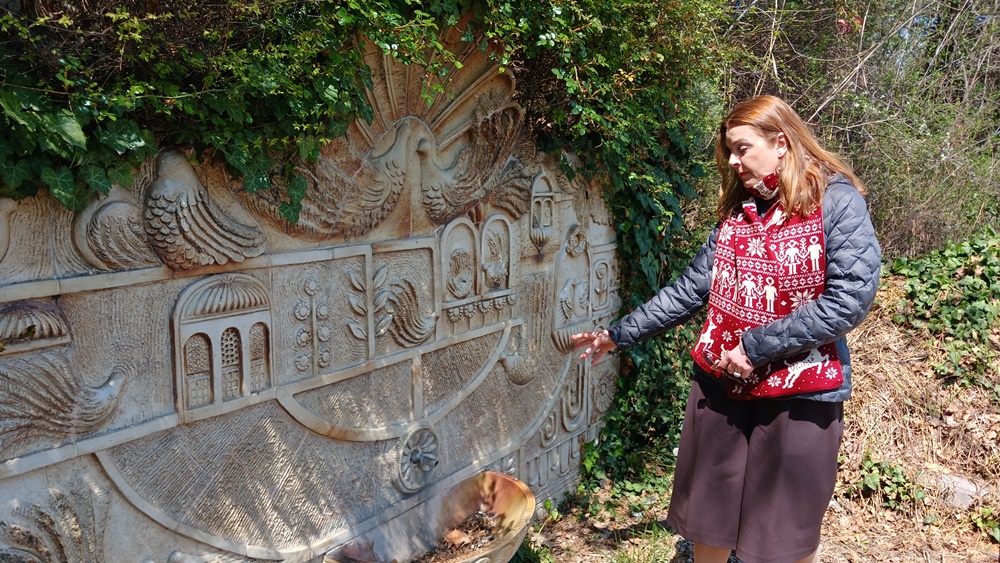
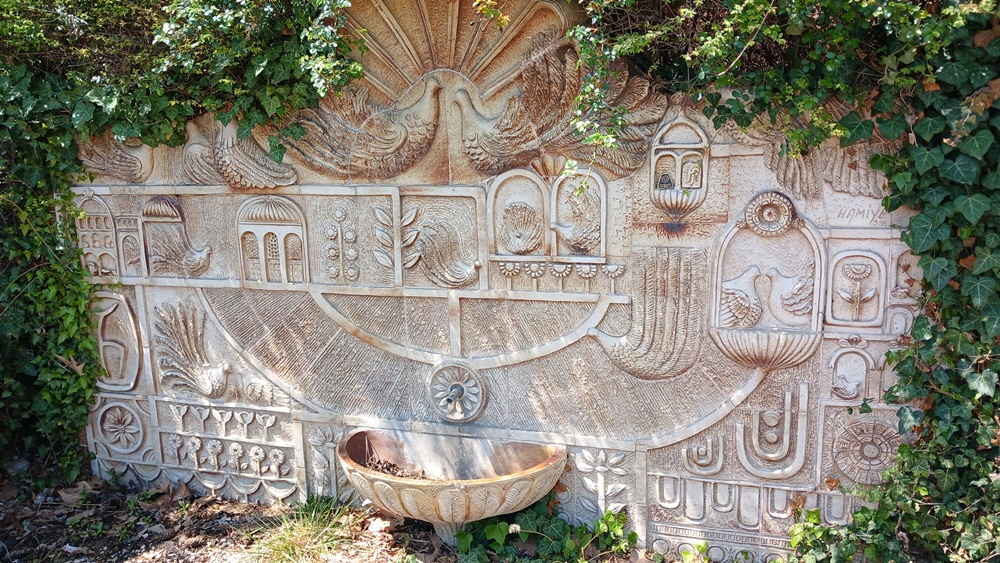
Yılmaz noted that the Derman Fountain, located at the entrance of the Beytepe Campus, was created in 1986 by Hamiye Çolakoğlu, a faculty member of the Department of Ceramics. She explained that Çolakoğlu named the fountain after her late brother.
Pointing out the extensive use of bird motifs in the work, Yılmaz said that Çolakoğlu made a conscious effort to incorporate figures inspired by Anatolian culture into her art. She also drew attention to the inscription on the fountain, “Love is the source of all beauty,” noting that the phrase was coined by Hamiye Çolakoğlu herself.
- The First Mural in Ankara
Yılmaz stated that the mural located in the entrance hall of Hacettepe Children’s Hospital was created by Ayetullah Sümer in 1954 and is considered the first mural incorporated into a building in Ankara. She explained that the artwork also serves as a historical record marking the completion of Hacettepe Children’s Hospital. According to Yılmaz, the mural depicts a seated child, a blossoming tree with spring branches rising above the child’s head, and lambs surrounding the scene. “This mural symbolizes recovery and hope,” she said.
Yılmaz also noted that the sculpture of İhsan Doğramacı with a child, located at the entrance of the Children’s Hospital, was a gift from Azerbaijani President Heydar Aliyev to İhsan Doğramacı. “I believe this sculpture is significant because it reflects İhsan Doğramacı’s major contributions to the study and treatment of childhood diseases,” she said.
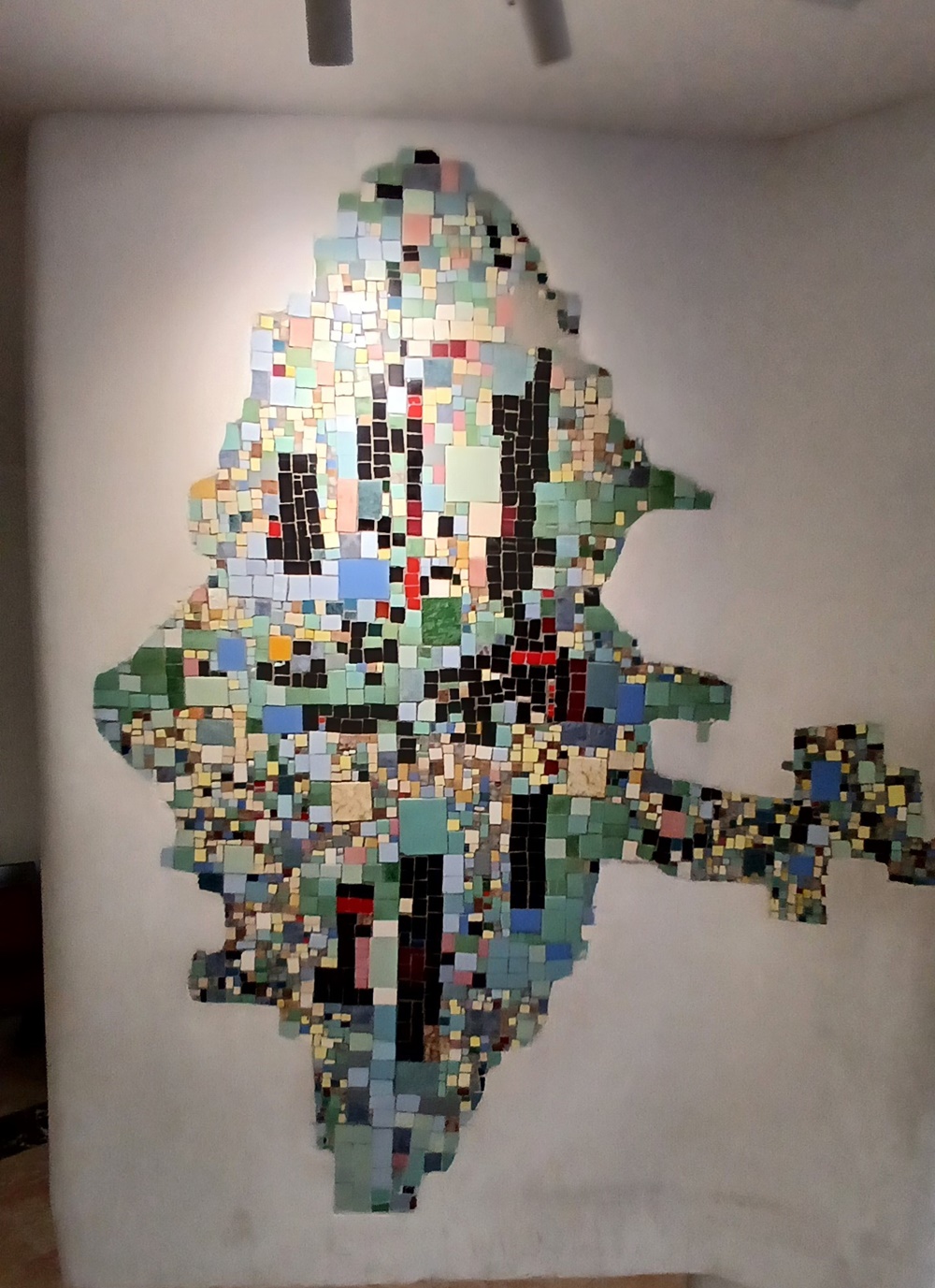
Referring to the ceramic artwork displayed at Hacettepe University Hospital, Yılmaz stated that it was created by Füreya Koral, the artist who established Türkiye’s first private ceramics studio. Noting that the artwork dates back to 1965, she described it as: “A highly significant work of art that deserves to be carefully preserved.”
- “The First University to Use Ceramic Panels in Interior Spaces”
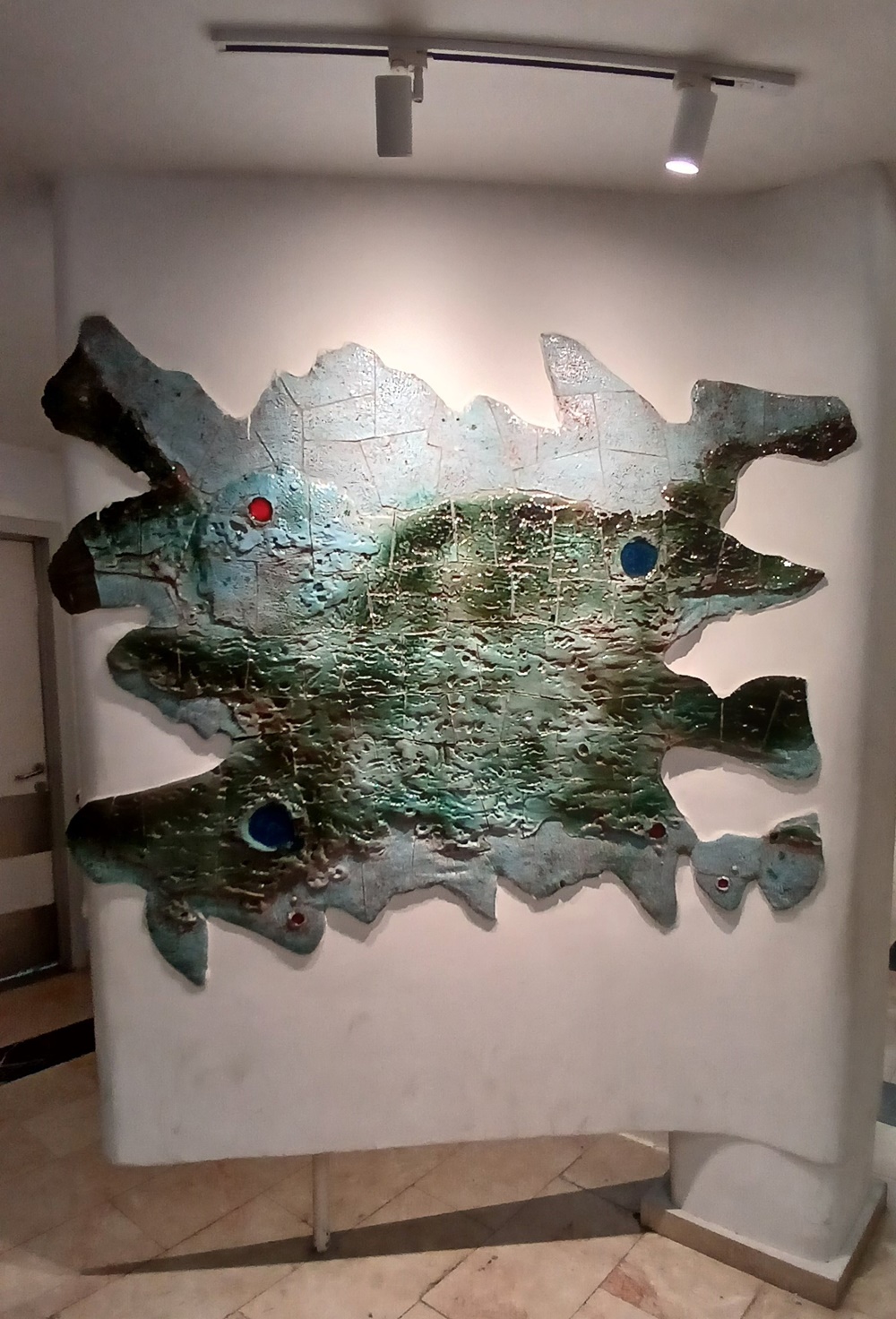
Prof. Meltem Yılmaz stated that the artwork located in Hacettepe University Hospital, which combines ceramic and glass elements, was created by Bedri Rahmi Eyüboğlu in 1965. Yılmaz emphasized that these artworks reflect the Republic’s efforts to bring art closer to society. “These artworks are, in fact, evidence of the Republic’s commitment to connecting people with art. They were especially incorporated into public spaces. Hacettepe University became the first university and hospital where ceramic panels were used in interior spaces. For that reason, it is of great significance.”
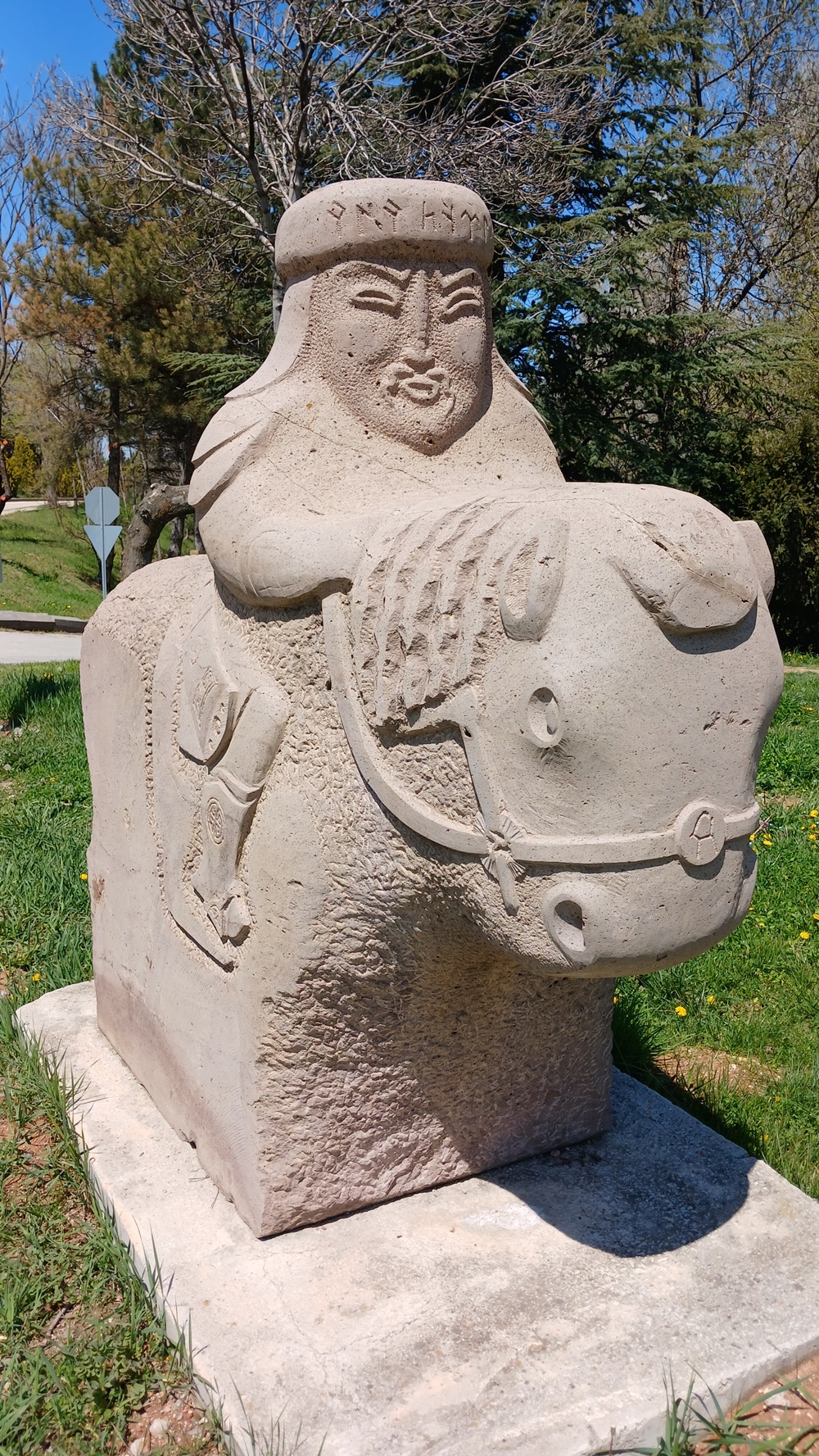
Yılmaz also referred to Kağan Valley, located near Gate B at the rear entrance of the Beytepe Campus, explaining that it was created as part of a project interpreting the Orkhon Inscriptions. She noted that the artwork was produced by sculptor Sultan Grigore, carved from andesite stone, and incorporates elements of the Orkhon alphabet.
- “Art That Supports Science”
Emphasizing that the artworks at Hacettepe University possess not only aesthetic value but also a direct impact on students, patients, patients’ relatives, and visitors, Yılmaz said: “The aim is to bring visitors and patients into contact with art in public spaces and to encourage them to think. These artworks inspire our students and stimulate their curiosity. They spend time with them, observe them, study them, and ask questions about them. Art that supports science exists throughout our campuses, in both outdoor and indoor spaces. We are responsible for preserving this heritage and passing it on to future generations in a positive and sustainable way.”
- Students, Patients, and Physicians Draw Inspiration from Art
Students studying at Hacettepe University’s Beytepe and Sıhhiye campuses, as well as patients and physicians benefiting from the Hacettepe Beytepe Outpatient Clinic, stated that the artworks displayed across the campuses and healthcare facilities contribute positively to their daily lives, educational experiences, and healing processes.
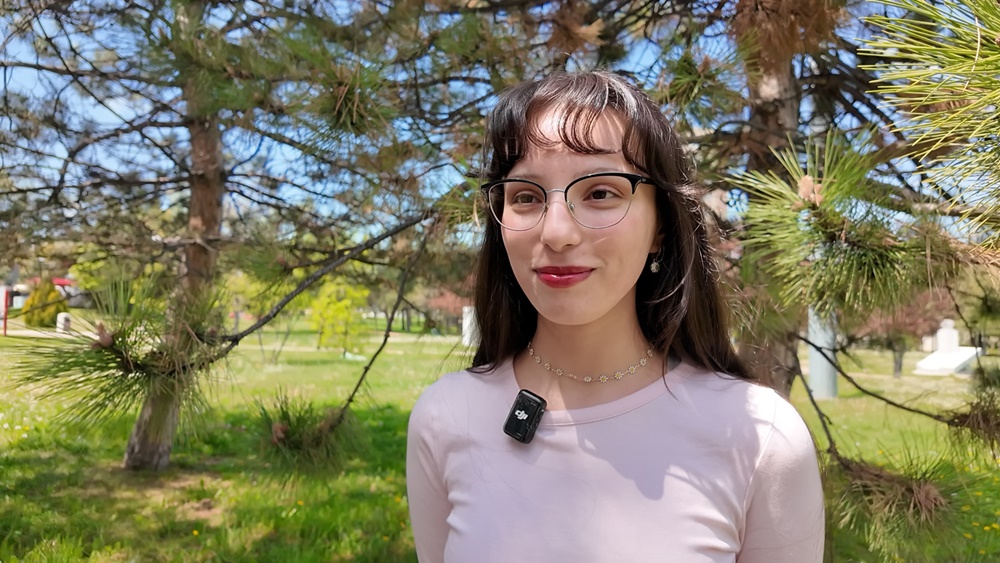
Melike Ayaz, a second-year student in the Department of Painting at the Faculty of Fine Arts, said that the artworks on campus make a direct contribution to her studies, particularly in anatomy, form, structure, and light. Explaining that her artistic work focuses primarily on female portraits and human anatomy, Ayaz emphasized the value of observing the artworks firsthand. “Wherever I turn my head, I can see sculptures and paintings. I can constantly find inspiration.”
She added that the artworks provide opportunities for learning and personal development for everyone on campus and that, as she learned how to interpret and appreciate them, her perspective became increasingly enriched.
Aysima Eskikale, a student in the Department of Interior Architecture and Environmental Design at the Faculty of Fine Arts, stated that when she moved from Istanbul to Ankara, what impressed her most was the campus’s green environment, the aesthetic quality of its buildings, and the way everyday life is integrated with works of art.
- Inspired by Art, He Changed His Field of Study
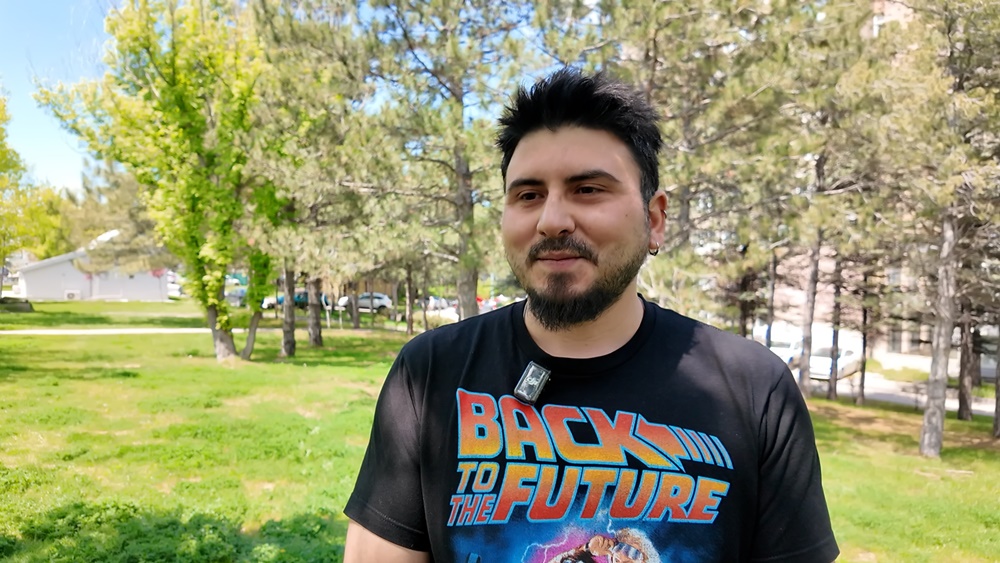
First-year Art History student Enes Karaca described the Beytepe Campus as an “open-air museum.” Recalling that he first arrived on the campus in 2007 as a student of English Economics, Karaca said that being immersed in an environment surrounded by art gradually enhanced his aesthetic awareness.
He noted that it is almost impossible to move from one point of the campus to another without encountering a work of art. According to Karaca, the years he spent at Beytepe became a source of inspiration and ultimately motivated him to retake the university entrance examination and pursue a degree in Art History.
- “I Feel as Though I’m Visiting an Authentic Art Exhibition”
Kevser Gökçe, who brought her child to the Hacettepe Beytepe Outpatient Clinic, said that during the ten years she has been receiving healthcare services there, she has carefully observed the stone works, paintings, and artworks displayed on the walls and throughout the facility. She noted that the artworks create a distinctive atmosphere within the healthcare setting. “Rather than feeling like I’m in a hospital, I feel as though I’m visiting an authentic art exhibition.”
Gökçe added that the artworks have a calming effect on children and help reduce their fear of hospitals.
Esma Zeynep Topçu, a student in the English Language Teaching program who visited the Hacettepe University Beytepe Outpatient Clinic for medical treatment, also expressed her appreciation for encountering artworks within the facility. She remarked that three-dimensional works, in particular, create a sense of tangibility and that discovering different artworks in various parts of the hospital had a positive effect on her experience.
- “The Collaboration Between Art and the Healing Power of Medicine Is Essential”
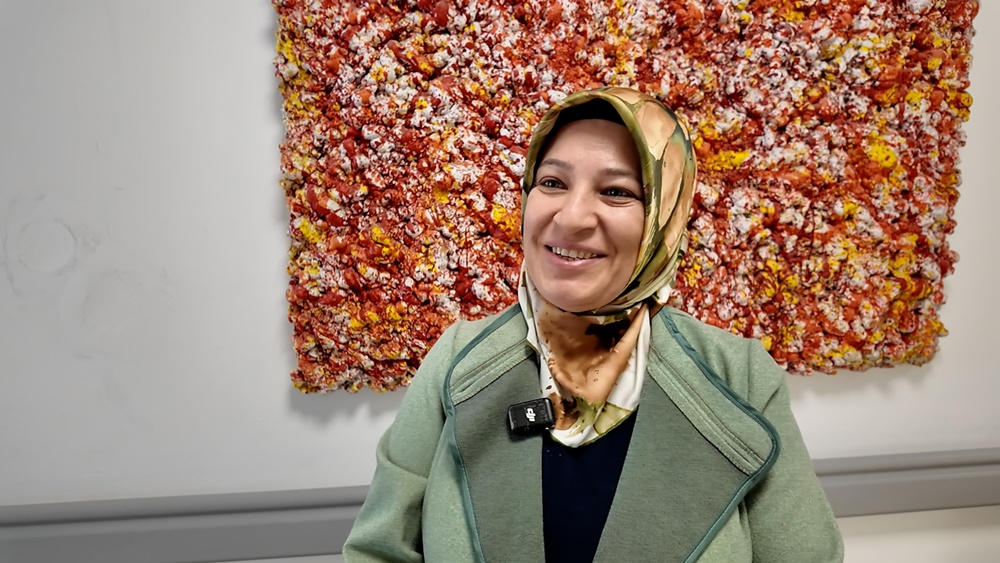
Dr. Feray Atilla, a faculty member in the Department of Family Medicine at Hacettepe University, stated that the Beytepe Campus offers not only healthcare services but also an aesthetically enriching environment.
Atilla noted that both the Sıhhiye and Beytepe campuses possess a rich artistic atmosphere. She explained that while many patients may not have the opportunity to visit exhibitions, they can nevertheless encounter works of art while waiting for treatment in a hospital setting.
Emphasizing the calming and restorative influence of art, Atilla stated: “The collaboration between art and the healing power of medicine is extremely important.”
Images
Images