


A New Approach to University Education: “Fewer Courses, More Practical Training and Hands-On Learning”
- CoHE President Özvar warns universities against monopolizing knowledge
- “Students can now compare our course content with that of leading universities around the world. We must change our approach to education.”
- Undergraduate curricula will be streamlined, giving students more time for research and projects
- Artificial intelligence will be used systematically and transparently in education, with training expanded for students and academics
October 13, 2026
Erol Özvar, President of the Council of Higher Education (CoHE), stated that artificial intelligence and digital technologies had fundamentally transformed access to knowledge and that universities needed to reassess their traditional approaches to education.
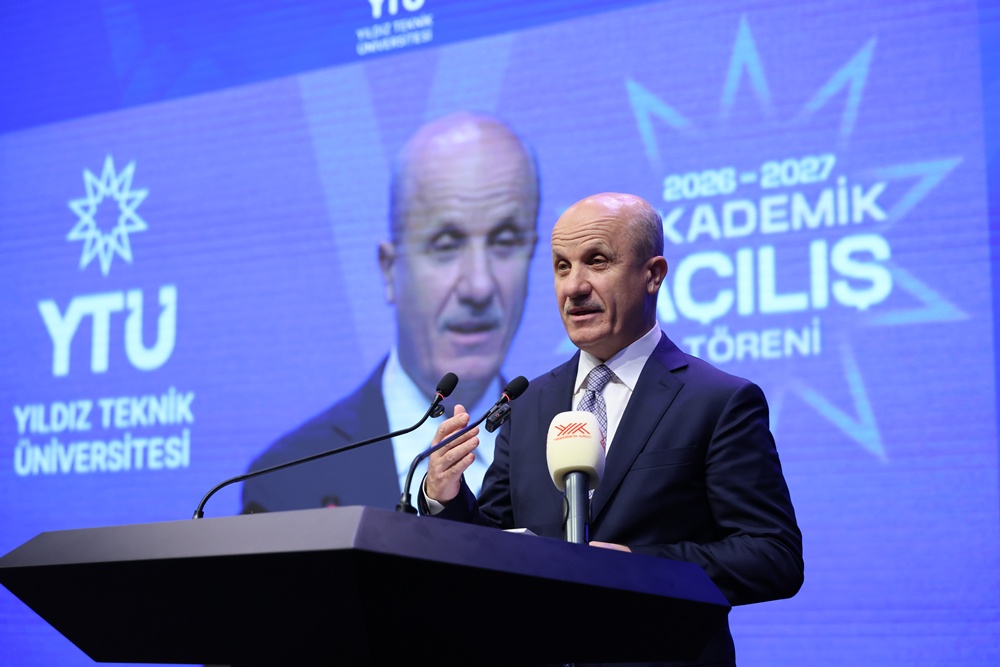
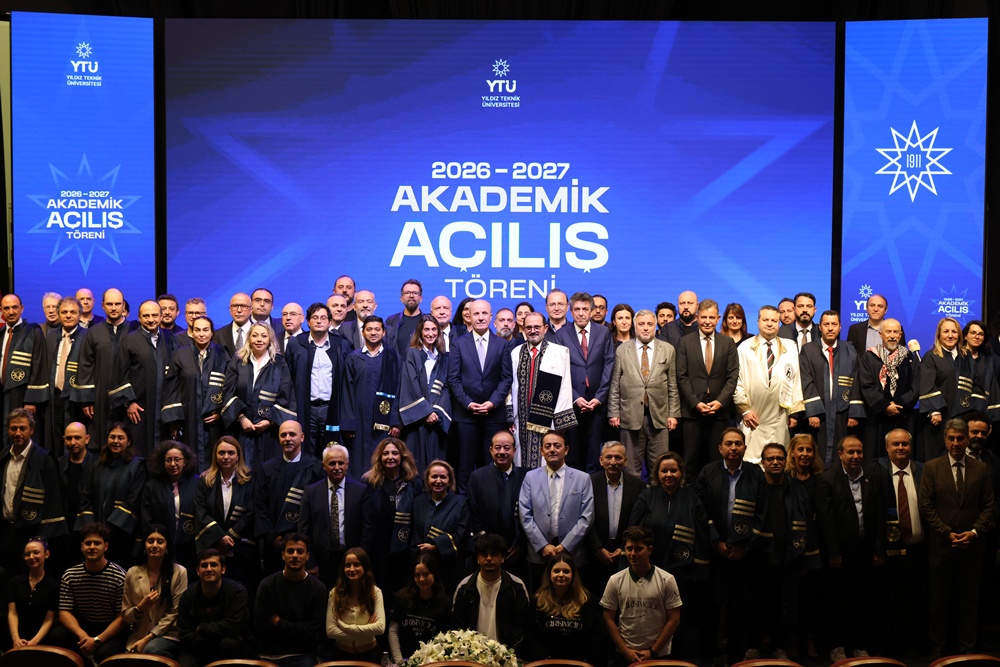
Speaking at Yıldız Technical University’s 2026-2027 Academic Year Opening Ceremony, Özvar noted that students could now access course materials from leading universities around the world on their smartphones and instantly compare them with the content taught by their own instructors.
Pointing out that universities’ privileged position in providing access to knowledge was changing, Özvar said: “Think about it, colleagues: if the standard courses we offer remain confined to this classroom, while our students use their smartphones to compare our lectures with course content from elsewhere, does our monopoly on knowledge still hold any value? This is something we need to reflect on.”
Emphasizing that these changes did not diminish the importance of academics but instead made the unique knowledge and experience they could offer students even more valuable, Özvar stated that universities needed to adapt their teaching methods to the new circumstances.
Courses Should Not Begin and End in the Classroom
Özvar stated that university education could not consist solely of transferring knowledge in the classroom and called for students to become more actively involved in research, practical training and production.
“If a course begins and ends in the classroom, it is incomplete,” Özvar said, emphasizing the importance of students learning by working, experimenting and creating alongside their instructors.
He noted that academics should serve not merely as lecturers but as mentors who guide students, share their experience and encourage them to conduct research. He added that one of the most valuable things academics could offer—something artificial intelligence could not easily replicate—was their unique personal and professional experience.
Özvar stressed that universities should not delay this transformation, warning that if teaching methods were not renewed, universities could find it increasingly difficult to attract students to their classrooms in the future.
Curricula to Be Streamlined and Practical Education Strengthened
Drawing attention to the heavy course loads in undergraduate programs, Özvar stated that an excessive number of courses made it difficult for students to develop in-depth expertise in particular fields. “How can a student who takes 70 or 80 courses during undergraduate education develop deep expertise in any subject?” he asked, noting that engineering programs in Europe typically include around 25 to 30 courses.
Özvar said universities should review their curricula, combine courses with overlapping content and reduce unnecessary workloads. The aim, he explained, was to give students more time for research, project development and practical work.
He added that universities could take action using their own resources without waiting for CoHE to introduce new regulations. Emphasizing that graduating with theoretical knowledge alone was insufficient, Özvar stated that university education needed to be restructured to develop students’ problem-solving, teamwork and practical production skills.
Emphasis on Transparency and Structured Training in the Use of Artificial Intelligence
Özvar noted that artificial intelligence tools were becoming increasingly widespread at universities. He stated that, rather than leaving students and academics to use these technologies independently and without coordination, universities should establish an institutional approach to AI education.
Calling for regular training programs on the use of artificial intelligence at universities, Özvar highlighted the importance of preparing guidelines tailored to the needs of different disciplines.
He stressed that AI should not be viewed as relevant only to engineering and information technology. Instead, universities should explore how these technologies could contribute to education and research across all fields, from the social sciences to the health sciences.
“There is enormous potential here, and this potential should not be explored through hidden or isolated efforts. Rather, I believe we need to bring it into the open and ensure transparency,” Özvar said.
Emphasizing that the use of artificial intelligence must adhere to the principles of academic ethics, Özvar noted that Yıldız Technical University could take a leading role in this field by introducing structured training programs for students and academic staff.
Assessment and Evaluation Methods Must Also Be Renewed
Özvar stated that the transformation in education should also be reflected in examination systems, drawing attention to the widespread use of multiple-choice tests at universities.
He said this approach, used across many disciplines—including law, health sciences, engineering and the social sciences—needed to be reassessed. He called for greater emphasis on assessment methods that measure students’ reasoning, analytical, communication and practical skills.
Özvar noted that CoHE had already issued the necessary warnings to universities on this matter and would closely monitor developments in assessment and evaluation practices.
Yıldız Technical University to Contribute to Sustainability Education
Özvar stated that the Artificial Intelligence and Data Analytics School, operating under the auspices of CoHE, had reached around 30,000 participants last year. He announced that Yıldız Technical University would join the initiative by contributing training in sustainability.
He said the aim was to extend the reach of these educational initiatives, which are conducted with contributions from Marmara University, Middle East Technical University, Istanbul Technical University and Boğaziçi University. He added that the initiative was intended to evolve into a digital university platform in the future.
Assessing Yıldız Technical University’s research performance, Özvar called on the university to expand its international academic partnerships, attract highly qualified researchers and doctoral students, and pursue more ambitious goals in scientific output.
Özvar wished students, academics and university staff a successful and productive academic year.
YTU Rector Prof. Debik: “The Future of an Entire Society Lies Beneath the Rubble in Gaza”
Yıldız Technical University Rector Prof. Eyüp Debik drew attention to the destruction of educational institutions in Gaza, emphasizing that universities must defend the right to education and human dignity.
“While we welcome our students into our classrooms in safety today, young people of the same age in Gaza are searching for ways to continue their education amid the ruins of universities. Along with the educational institutions being targeted, the memory and future of an entire society also lie beneath the rubble,” Debik said.
Stating that Yıldız Technical University continued to work toward its goal of entering the world’s top 100 universities, Debik noted that improving educational quality and strengthening the university’s international academic reputation remained among its key priorities.
Images





Images