


Data Analysis School Opens the Doors of Digital Transformation to All
December 19, 2025
Spearheaded by the Council of Higher Education, the Data Analysis School has completed its first term as one of the most comprehensive online training programs ever launched to expand digital skills worldwide.
Developed by the Council of Higher Education to contribute qualified, technology-oriented human capital to Türkiye’s digital transformation process, the program quickly gained widespread interest and marked a new milestone in higher education. Coordinated by Marmara University’s Institute of Population and Social Research, and academically supported by Middle East Technical University (METU), Istanbul Technical University (ITU), and Boğaziçi University, the initiative stands out as a unique large-scale national online data literacy program on a global level.
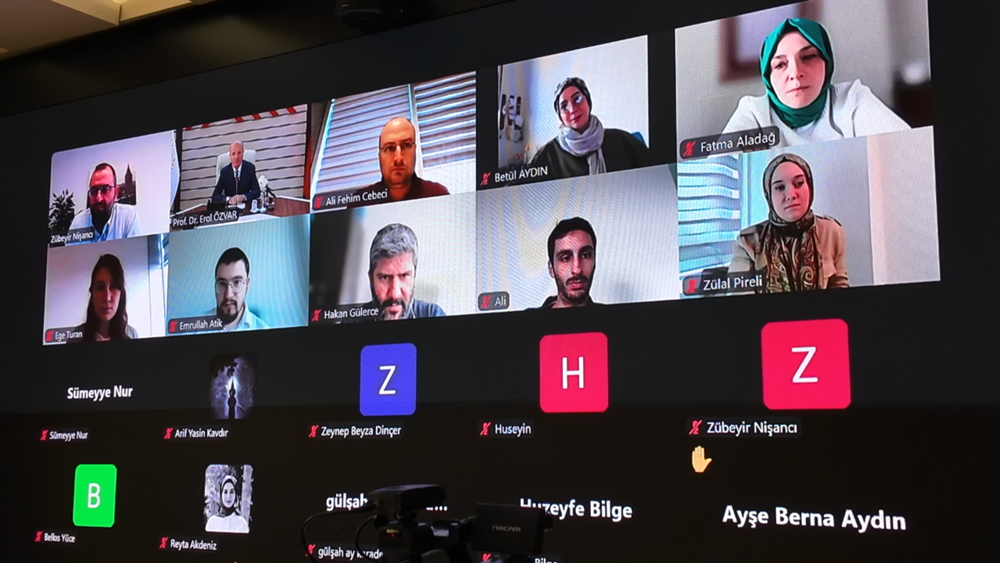
The program received 135 thousand applications, of which 50 thousand participants were accepted. Now in its ninth week, around 30 thousand participants are actively attending classes—figures that clearly illustrate the growing public demand for data science and digital competency.
-27 Weeks, 284 Hours of Comprehensive Curriculum-
Offered entirely online and free of charge, the Data Analysis School delivers an intensive 27-week education plan consisting of 93 classes and 284 hours of instruction. The seven-module curriculum offers a holistic learning experience across a broad spectrum—from basic statistics to artificial intelligence, panel data analysis to psychometrics, and computational social sciences to digital humanities.
Participants gain hands-on analytical skills using up-to-date digital tools such as SPSS, R, Python, Excel, and GIS, thereby enhancing their data-driven decision-making capacity in both academic and professional settings. The program also promotes equal opportunity in higher education by enabling access regardless of geographical or socioeconomic circumstances.
Özvar: “A Project That Is Unique Even Worldwide”
Erol Özvar, President of the Council of Higher Education, emphasized that the Data Analysis School plays a critical role in Türkiye’s digital transformation vision, offering the following assessment:
“As the Council of Higher Education, our main priority is to strengthen the digital skills of our university students and researchers and to disseminate a culture of data-driven thinking across all segments of society. With participation on this scale, the Data Analysis School is a project that is unique even worldwide. The fact that the number of applications exceeded one hundred thousand in such a short time demonstrates how ready and eager our society is for digital transformation. This picture clearly shows that we have responded to a real need with the right model.”
Highlighting the program’s interdisciplinary structure, Özvar added:
“By bringing together participants from a very wide range of fields in the same digital classrooms, the Data Analysis School represents an exemplary model that strengthens cooperation among our universities. This structure, formed with the contributions of four universities, demonstrates the collective production capacity of our higher education ecosystem. The Data Analysis School is a lasting investment that reinforces Türkiye’s capacity to develop a domestic and highly qualified human resource base in strategic technologies.”
– MP, Rector, Software Developer, Student in the Same Classroom –
One of the most striking aspects of the Data Analysis School has been the diversity of its participant profile. Rectors, medical doctors, software developers, students, members of parliament, and researchers have come together in the same digital classrooms.
Program Coordinator Zübeyir Nişancı, Associate Professor, stated that the number of applications demonstrates the scale of need for this field across very different segments of society, noting:
“There are very few examples in the world of a live, online education program conducted on a single system at such a large scale. Participants come from highly diverse backgrounds. We have medical doctors, computer engineers, software developers, sociologists, rectors, nurses—and even a member of parliament among our students. Our goal is to enable participants to reach a level where they can independently continue learning in the areas that interest them. Through distance education, we have seen that high-quality education can be delivered to very broad audiences much more quickly, at far lower cost, and with far greater flexibility.”
Dr. Fehmi Cebeci, a faculty member at Marmara University who leads the Panel Data Analysis module, evaluated the strong interest in the program as follows:
“I encountered an applicant profile far beyond my expectations. This picture shows that the Data Analysis School will make highly significant contributions to our country’s digital transformation and to the development of its human capital.”
– Digital Footprints Open New Avenues for Research –
Dr. Fatma Aladağ, a faculty member in the Department of Social Research at Marmara University and Director of the Digital Humanities module, emphasized the program’s pioneering role, stating:
“For the first time in Türkiye, approaches such as text mining, network analysis, spatial data, and visualization are being offered in an applied manner within the field of the humanities. This is a very important step that strengthens digital literacy across many disciplines, from history and literature to linguistics and philosophy.”
Drawing attention to the rapid rise of the field, Dr. Fuat Kına, a faculty member in the Department of Sociology at Marmara University and Director of the Computational Social Sciences module, noted:
“Big data and new analytical techniques are transforming social science research. A large part of social life now takes place in the digital sphere. These digital footprints open up new research pathways for questions that are difficult to answer using traditional methods.”
– Psychologists, Legal Professionals, and Philosophers Come to Learn Artificial Intelligence –
Associate Professor Mustafa Taha Koçyiğit, an instructor in the Artificial Intelligence and Data Science Module and a faculty member at the Data Science and Artificial Intelligence Institute of Boğaziçi University, noted that rapid developments in the field of generative artificial intelligence are increasing the demand for a qualified human resource base. Koçyiğit stated:
“Generative artificial intelligence methods are advancing far more rapidly than other technologies. Society needs to acquire these new capabilities and adapt to this technology. Legal professionals, social scientists, psychologists, and even philosophers are attending the classes. The Data Analysis School is, in fact, addressing a very important need. We aim to inform students at different levels, from theory to practice. There are particularly significant opportunities here for students coming from non-technical backgrounds.”
– Participants Express High Satisfaction –
Participants, including students, academics, and public sector employees, have expressed their satisfaction with the program. Some of the views shared by Data Analysis School students are as follows:
Ceydanur Yaşa (Sociology student): “I am interested in family and crime studies within sociology, so I chose the Computational Social Sciences module to learn data visualization and data analysis. Digital data provides us with a very important resource for understanding social issues.”
Emre Fişne (PhD student at the Data Science and Artificial Intelligence Institute): “I believe that launching such a program and making it accessible will bring great benefits to our country. I both work as a research assistant at the institute and study here—so I am both learning and teaching.”
Meryem Arslanbaş (Sociology student): “The school opens new horizons in the social sciences.”
Tuğçe Bulut (Sociology student): “It assumes a pioneering role in the world of social sciences.”
Mustafa Çizmecioğlu (Public servant): “The institute’s work will spread with a domino effect. They asked for a letter of intent, and I wrote a very emotional one. Of course, there may be some challenges for adults like myself in adapting, but what we learn here is truly valuable.”
Ramazan Ediz Değirmenci (Software Developer): “I can say that in the period ahead, artificial intelligence and machine learning will in fact become two of the most important fields. At this point, we will need human capital. In a sense, this program makes a major contribution to building that human resource base.”
Neray Pala (Master’s student in Turkish Language and Literature): “I came across it on X and wondered, ‘What could a data school possibly have to do with me?’ When I saw that there was a track that also includes digital humanism, I decided to apply.”
Tuğçe Bulut (Student of Sociology and Public Relations): “Sociology often seems like a field with limited prospects, but I thought that by learning data analysis and programming languages like these, I could add new skills to myself and make my field more future-oriented. Learning this kind of programming can require paying very high fees. This is a free program—one that anyone can apply to.”
Images



Images