


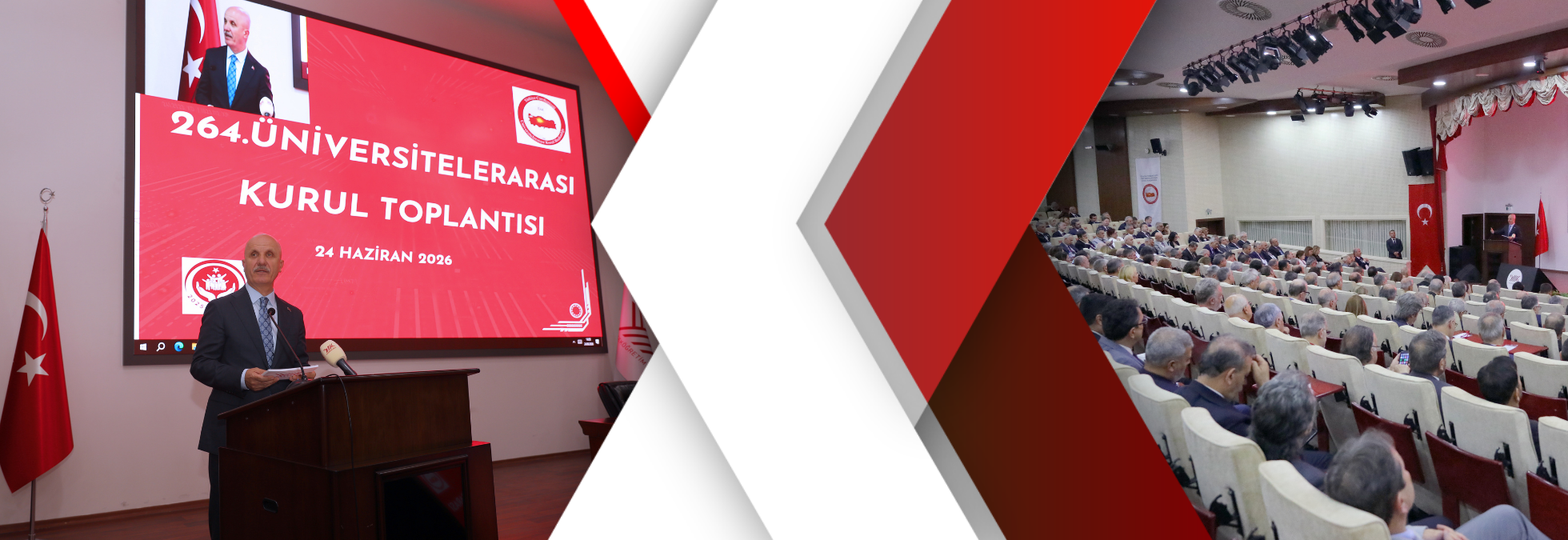
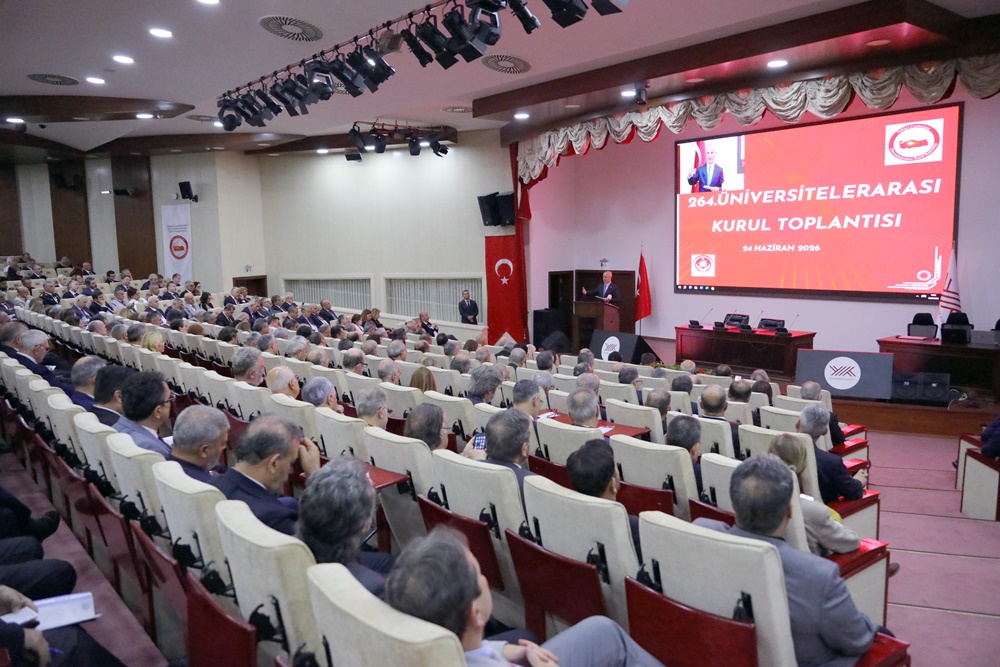
264th Interuniversity Board Meeting Held at Council of Higher Education
- President of the Council of Higher Education Erol Özvar calls on university rectors: "Be present on campus during university promotion days and actively showcase our newly launched academic programs."
- "We are restructuring program quotas in line with Türkiye's workforce needs."
- "We are expanding vocational education and work-based learning across higher education."
June 25, 2026
President of the Council of Higher Education (CoHE) Erol Özvar announced that university program quotas are being restructured in line with Türkiye's workforce needs and that new academic programs—particularly in artificial intelligence and digital technologies—have been introduced. "Promoting our universities, faculties, and academic programs is among our highest priorities. I encourage our rectors to be present on campus during university promotion days and to actively introduce the new programs we have launched," Özvar said.
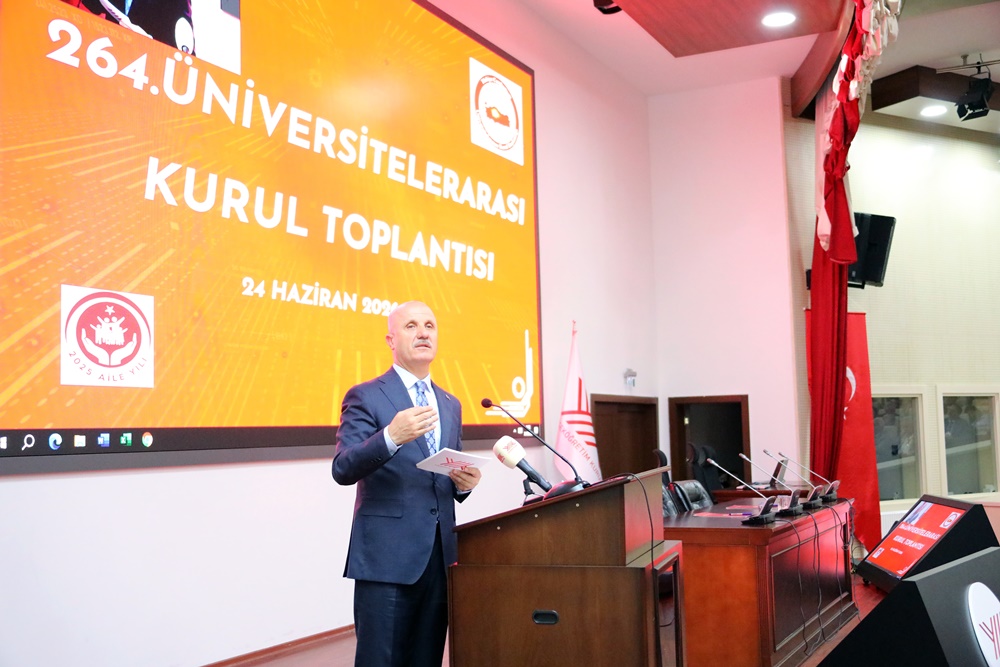
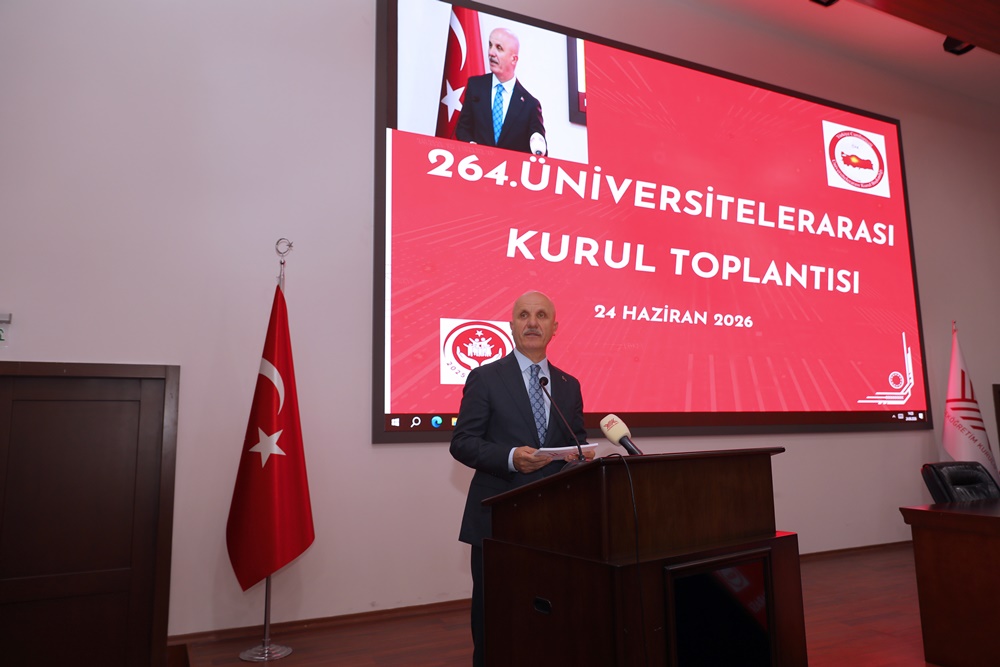
The 264th Interuniversity Board (IUB) Meeting was held under the chairmanship of Özvar at the Council of Higher Education. In his opening remarks, Özvar stated that meeting Türkiye's human resource needs remains at the center of the ongoing transformation of higher education and emphasized that university program quotas are being redesigned to address the country's future priorities.
He explained that the Council takes into account Türkiye's employment planning, workforce demands, emerging strategic fields, and the effective development of the country's human capital. "We have created new quotas by launching new academic programs, particularly those focused on artificial intelligence and digital technologies," he said.
- "I encourage our universities to help prospective students make informed choices during the university preference period"
Özvar noted that information and guidance activities would continue throughout the university selection period to help prospective students make informed decisions.
Highlighting the importance of promotional efforts, he said: "I strongly encourage our rectors to be present on campus during university promotion days. In addition, we must actively promote our universities, academic programs, vocational schools, and graduate schools through our websites, social media platforms, and other communication channels. We should do this not only in Turkish but also in foreign languages. Every university should strive to attract students with higher academic achievement to each of its programs."
- "We Are Strengthening the Link Between Education and Employment"
Özvar stated that the Council is implementing a comprehensive transformation aimed at strengthening vocational education and expanding work-based learning opportunities. "Our primary objective is to strengthen the connection between education and employment, enable our students to gain more extensive experience in real workplace environments before graduation, and make our higher education system more responsive to the evolving needs of different sectors," he said.
As part of this transformation, pilot projects have already been launched, creating new partnerships between universities and the industrial and business sectors.
According to Özvar, pilot implementations carried out in Istanbul, İzmir, and Gaziantep have produced results beyond expectations, while strong cooperation with industry has made a direct contribution to graduate employability.
- Emphasis on Internationalization
Özvar also stressed that increasing the global visibility of Turkish higher education remains one of the Council's strategic priorities. He highlighted the importance of universities becoming more actively involved in international research networks.
"Greater participation by our universities in international research collaborations and making them more attractive to students and academics from around the world will further enhance the global recognition and influence of Turkish higher education," he said.
While acknowledging the significant progress achieved so far, Özvar emphasized that continued efforts are necessary to reach even more ambitious goals.
- "The Number of Programs Awarded the TQF Logo Has Reached 2,120"
Özvar noted that both program accreditation and institutional accreditation rates continue to rise across Turkish universities and announced significant progress within the Turkish Qualifications Framework (TQF). "We have achieved substantial progress in both institutional and program accreditation. The number of academic programs awarded the Turkish Qualifications Framework logo has now reached 2,120," he said.
He encouraged universities to continue expanding the use of the TQF logo, emphasizing its importance in strengthening compatibility with the European Higher Education Area.
- "Micro-Credentials Are a Bold Step"
Recalling that the “Principles and Procedures for the Micro-Credentials Framework in Higher Education Institutions” entered into force the previous week, Özvar stated that the new regulation introduces a more flexible, lifelong learning and competency-based approach to higher education.
Describing micro-credentials as "a bold step" for the higher education system, he noted that the framework will enable students, graduates, and working professionals to acquire the knowledge and skills they need through flexible, modular learning opportunities rather than relying solely on long-term degree programs.
Images
Images